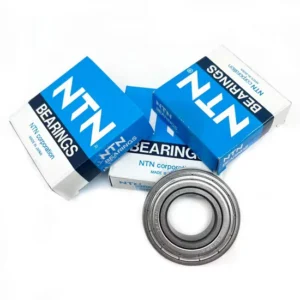
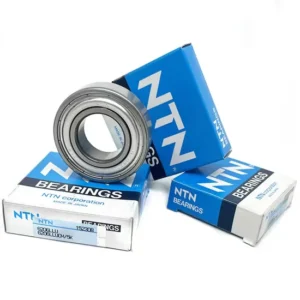
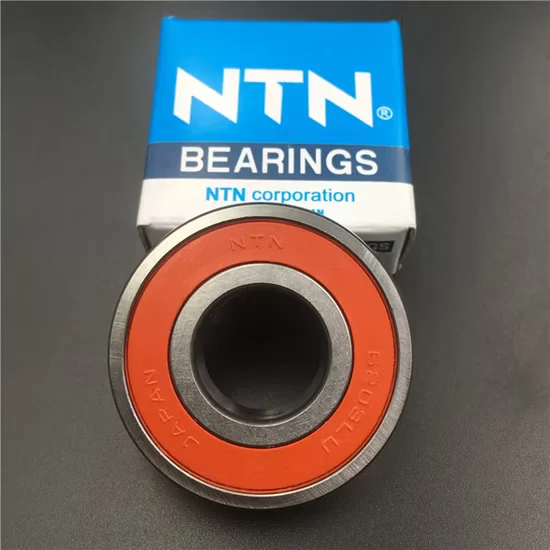
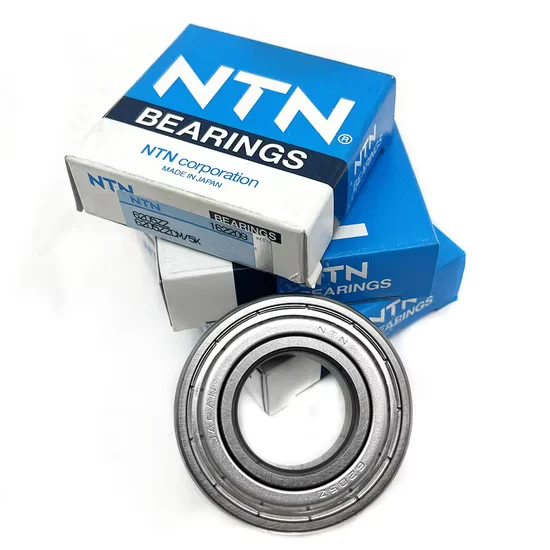
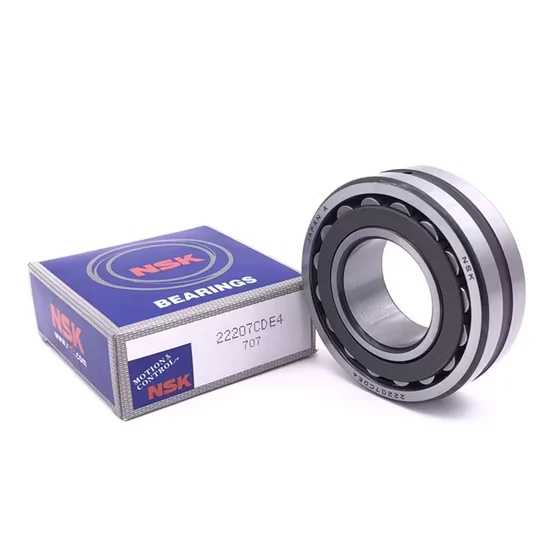
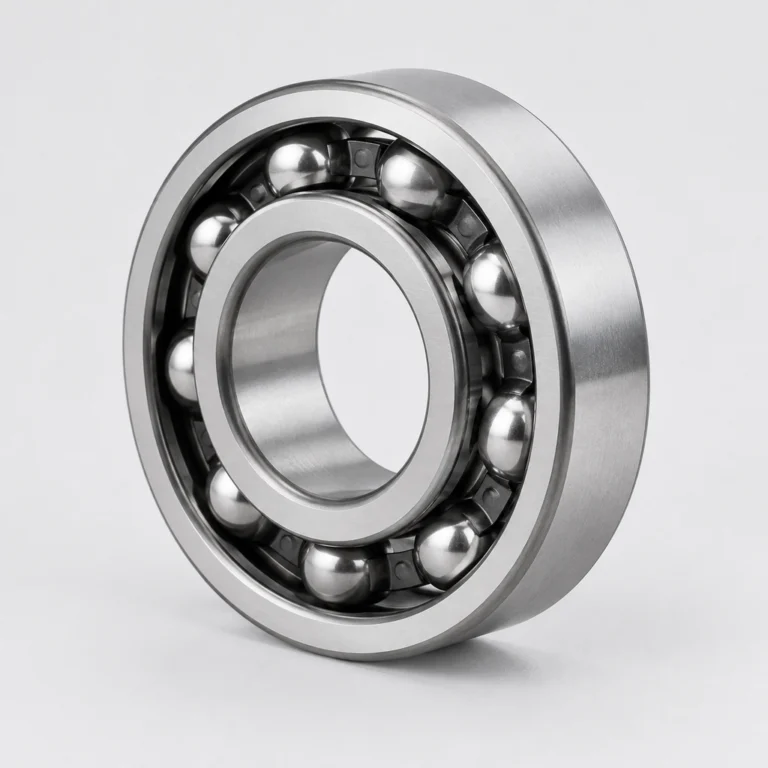
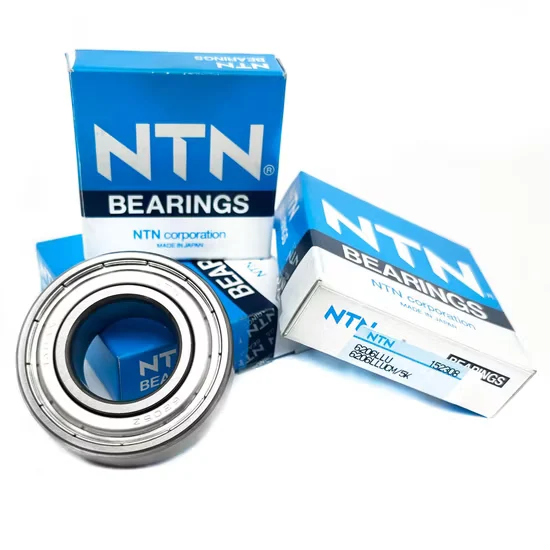
Traceable Batch Origins — Every shipment of these conveyor bearings includes mill certificates linking the exact heat number to the production date.
Technical Specifications
| Parameter | Value |
| Designation | 6408 6409 6410 6411 6412 |
| Bearing Type | Deep Groove Ball Bearing |
| Material | Bearing Steel |
| Vibration Grade | Z1V1, Z2V2, Z3V3, Z4V4 |
| Seal or Shield Type | ZZ, 2RS, Open |
| Lubrication | Grease or Oil |
| Origin | Shandong Province, China |
| HS Code | 8482102000 |
Application Suitability
| Industry | Typical Applications |
| Material Handling | Belt conveyor drive pulleys and return idlers |
| Cement Production | Clinker cooling apron conveyors and bucket elevators |
| Mining Operations | Overland troughing idlers and stacker reclaimers |
Why Unspecified Seals Destroy Conveyor Idlers Prematurely
When sourcing the X&S 6408 6409 6410 6411 6412 deep groove ball bearing for heavy-duty troughing idlers, leaving the seal type ambiguous invites catastrophic dust ingress. Dust infiltration turns lubricant into an abrasive paste, grinding the raceways from the inside out. I learned this the hard way on a Nigerian cement plant project. We shipped a batch of 6410 bearings but failed to verify the suffix, accidentally sending metal-shielded units instead of rubber-sealed ones into a high-dust environment. Within months, the fine clinker dust bypassed the shields, causing massive unplanned downtime and severe financial losses. Now, when configuring any X&S 6408 6409 6410 6411 6412 deep groove ball bearing, I enforce strict suffix verification against the actual site conditions to prevent repeat failures. Understanding the exact environmental exposure is the only way to guarantee longevity in bulk material handling.

Aligning Bearing Steel Construction with Continuous Conveyor Loads
Conveyor systems demand components that withstand continuous radial loads and moderate shock impacts from heavy material drops. The bearing steel construction of this series provides the necessary core hardness to resist spalling under extreme belt tension. By offering multiple vibration grades, the X&S 6408 6409 6410 6411 6412 deep groove ball bearing allows maintenance teams to select the exact noise and smoothness profile required for high-speed drive pulleys versus slow-moving return idlers. This flexibility ensures that energy is not wasted on unnecessary precision grades for low-speed applications, while critical drive nodes receive the refined surface finishes they demand.
Managing Dust, Moisture, and Lubrication Intervals
Bulk material handling environments expose rotating elements to severe particulate contamination and occasional moisture washdowns. Selecting between contact rubber seals and non-contact metal shields dictates the balance between friction heat and pollution exclusion. Furthermore, the choice of grease or oil lubrication must align with the relubrication intervals dictated by the plant's maintenance schedule. Operating at elevated temperatures near kiln discharge zones also requires careful consideration of thermal expansion effects on internal clearance. If the internal clearance is too tight, thermal growth will cause the rolling elements to bind and skid, leading to rapid surface degradation.
Decoding Vibration Grades and Seal Configurations
The Z1V1 through Z4V4 vibration classifications indicate the geometric precision and surface finish of the raceways, directly influencing operational smoothness in high-speed electric motor drives. For the sealing arrangements, open designs rely entirely on external housing seals and regular grease purging, making them suitable for easily accessible maintenance points. Metal shields provide basic dust exclusion with minimal friction, while rubber contact seals offer superior protection against fine cement powder, albeit with a slight increase in running torque. Choosing the correct configuration requires evaluating the specific particle size of the ambient dust, as extremely fine powders will easily penetrate non-contact shields.
The Cascading Financial Impact of Incorrect Suffix Selection
Installing a shielded bearing in a rubber-sealed application leads to rapid particulate ingestion, transforming the lubricant into a lapping compound. This triggers premature surface fatigue and eventual seizure, which often damages the adjacent shaft and housing. The resulting unplanned downtime on a critical overland conveyor halts the entire production line, generating losses that vastly exceed the initial component savings. Such failure patterns are consistently categorized under abrasive wear in standard diagnostic frameworks. Replacing a seized unit also requires extensive labor to cut away damaged shafts, multiplying the total cost of ownership far beyond the price of the bearing itself.
Securing Exact Suffix Configurations Through Rigorous Verification
Mixed-size bearing packages for conveyor MRO often arrive with inconsistent seal types due to supplier inventory mixing. We prevent this by cross-checking every single part number in your 6408 to 6412 order against the specific dust and moisture profile of your site. Our documentation provides complete batch traceability, ensuring the material certificates match the physical units received. Additionally, our engineering team reviews your vibration grade requirements to ensure high-speed drive units receive the appropriate Z3V3 or Z4V4 variants, eliminating guesswork. This rigorous verification process guarantees that the exact X&S 6408 6409 6410 6411 6412 deep groove ball bearing you need arrives ready for immediate installation.
Documentation & Authenticity
- Mill test certificates verifying the specific bearing steel heat number for the 6408-6412 batch.
- Dimensional inspection reports confirming bore and outside diameter tolerances before dispatch.
- Vibration and noise test logs matching the requested Z1V1 to Z4V4 grade for each model.
- Seal type verification checklists ensuring 2RS or ZZ suffixes align with the purchase order.
- Certificate of Origin documenting the Shandong Province manufacturing source for customs clearance.
Storage, Handling & Mounting
- Store the open-type variants in their original VCI packaging until mounting to prevent raceway corrosion.
- Use induction heaters for the larger 6411 and 6412 sizes to avoid uneven thermal expansion during fitting.
- Keep rubber-sealed 2RS units away from direct UV exposure to prevent elastomer degradation before installation.
- Apply clean lint-free gloves when handling Z3V3 and Z4V4 grades to avoid skin oils affecting high-speed performance.
- Ensure shaft shoulders are perfectly square to prevent axial distortion of the thin-section rings on the 6408 model.
Engineering Data Required for Precise Configuration
To finalize the optimal seal and clearance combination for your conveyor network, please provide the specific radial and axial load profiles along with the operating RPM for each pulley position. Sharing the ambient dust concentration and washdown frequency allows us to recommend the exact shield or contact seal variant. Additionally, supplying the OEM equipment tag numbers enables our team to perform accurate cross-reference checks and verify housing dimensional limits. This technical data exchange ensures we deliver a fully optimized package that maximizes mean time between failures across your entire material handling facility.
Frequently Asked Questions
Q: How do I choose between ZZ, 2RS, and Open seals for conveyor idlers?
A: Open bearings require external housing seals and frequent relubrication, ideal for accessible areas. ZZ metal shields offer low-friction dust protection for high-speed drives. For severe cement dust environments, 2RS rubber contact seals provide the necessary exclusion barrier, though they generate slightly more friction heat. Always match the seal to the specific contamination level.
Q: What do the Z1V1 to Z4V4 vibration grades mean for conveyor performance?
A: These grades define the geometric accuracy and surface finish of the raceways and rolling elements. Lower grades like Z1V1 are sufficient for slow-moving return idlers, while Z3V3 and Z4V4 ensure ultra-smooth operation for high-speed electric motor drives and main drive pulleys, significantly reducing structural noise and vibration transmission.
Q: How can I verify the genuine origin and trademark of the supplied bearings?
A: Every shipment includes comprehensive traceability documentation, including mill certificates that link the exact heat number to the production batch. We also provide dimensional and running accuracy inspection reports. This rigorous paper trail ensures the physical units perfectly match the manufacturer's specifications and your original purchase order requirements.
Q: What is the recommended lubrication for high-speed conveyor drive applications?
A: High-speed drive pulleys typically benefit from oil lubrication or low-viscosity synthetic grease to minimize churning losses and friction heat. However, if the housing lacks continuous oil circulation, a high-quality lithium-complex grease with excellent mechanical stability is preferred. The choice ultimately depends on the relubrication intervals and operating temperatures.
Q: How should I manage mixed-model bulk orders for MRO inventory optimization?
A: When ordering mixed sizes from 6408 to 6412, specify the exact seal and vibration grade for each individual part number rather than applying a blanket specification. We consolidate these varied configurations into a single shipment, providing a detailed packing list that maps each physical box to its specific technical suffix, simplifying your warehouse receiving process.