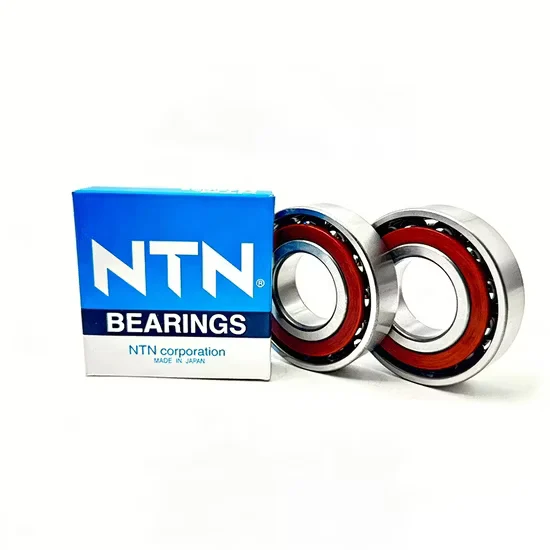
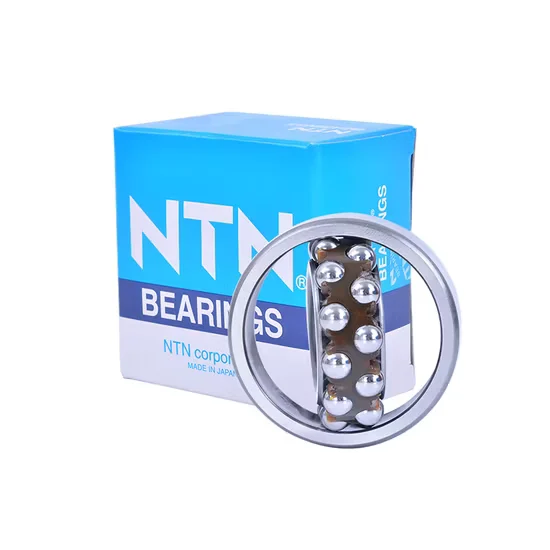
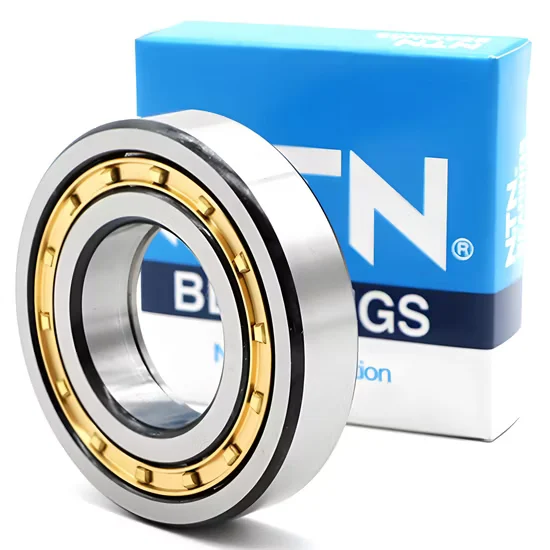
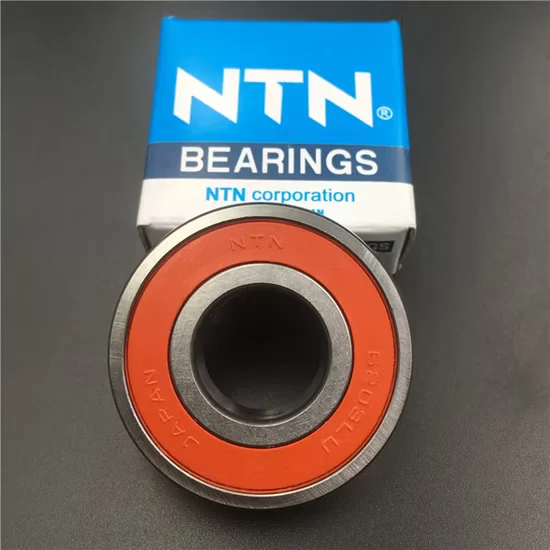
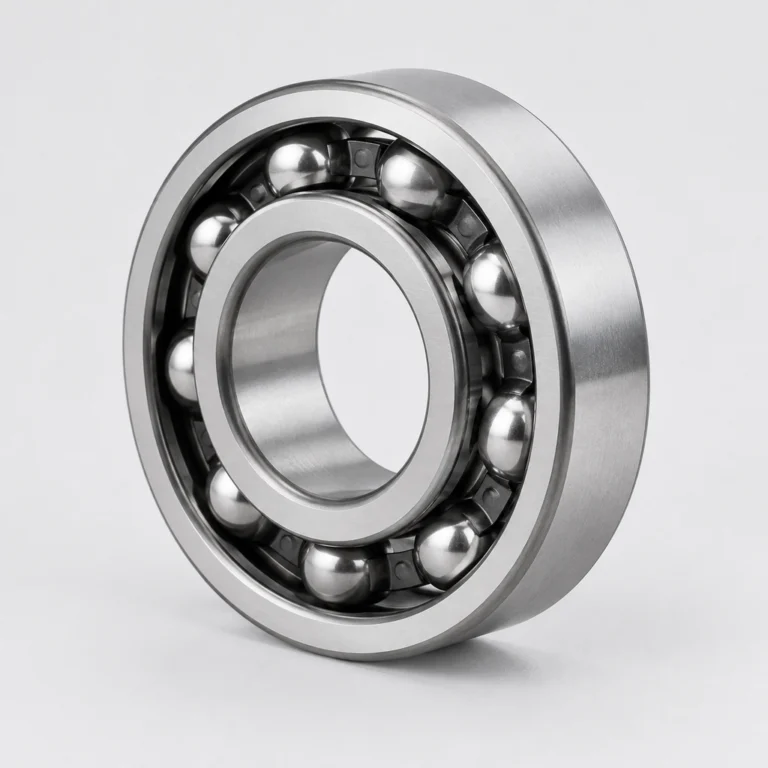
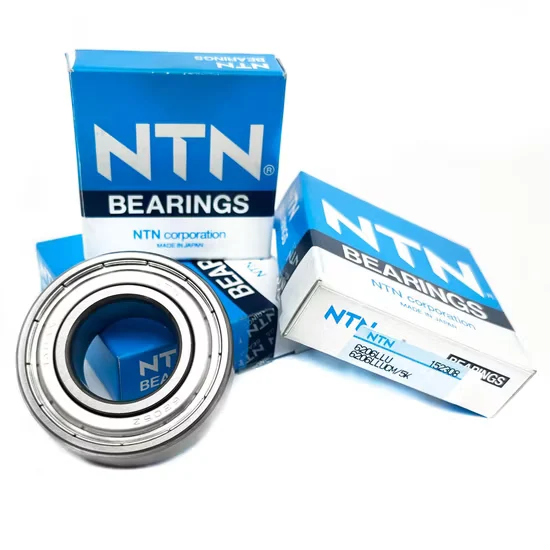
Unified Sourcing Coverage — Consolidate your NTN 7220 angular contact ball bearing orders with other premium brands in a single shipment without coordinating multiple suppliers.
Technical Specifications
| Parameter | Value |
| Designation | NTN 7220 |
| Bearing Type | Single Row Angular Contact Ball Bearing |
| Bore Diameter (d) | 100 mm |
| Outside Diameter (D) | 180 mm |
| Width (B) | 34 mm |
| Seal or Shield Type | Open |
| Material | Bearing Steel |
| Lubrication | Grease or Oil |
| Number of Rows | Single |
| Origin | Japan |
Application Suitability
| Industry | Typical Applications |
| Machine Tool Manufacturing | High-speed spindle assemblies and precision boring heads |
| Industrial Automation | Robotic arm joints and high-precision rotary tables |
| Fluid Machinery | High-speed pump shafts requiring rigid axial support |
Why Standard Precision Fails in High-Speed Spindles for the NTN 7220 angular contact ball bearing
Default precision classes simply cannot handle the thermal expansion and vibration generated at elevated spindle RPMs.
Over the years attending international trade shows and visiting manufacturing facilities, I have witnessed countless machine tool spindle failures caused by incorrect component selection. On one notable occasion, a client installed this exact model with a standard precision rating, resulting in excessive vibration during high-speed operations and eventual thermal seizure of the spindle shaft. That disastrous experience reinforced a critical rule: high-rigidity spindle applications absolutely demand premium precision grades and exact preload configurations. Relying on baseline tolerances for high-speed machining inevitably leads to catastrophic equipment damage and extensive unplanned downtime.

Matching Single Row Geometry to Spindle Rigidity Demands
The single row configuration of the NTN 7220 angular contact ball bearing provides the necessary axial rigidity when properly preloaded in a multi-bearing spindle stack. Our engineering team frequently assists clients in cross-referencing this specific geometry against equivalent international models to ensure the exact load distribution matches the machine tool's operational profile. By analyzing the combined radial and axial forces, we help manufacturers avoid the common pitfall of under-specifying the contact angle, which severely compromises the rigidity required for heavy-duty cutting operations. This technical validation ensures that the selected component integrates flawlessly into complex precision assemblies.
Managing Thermal Growth and Lubrication Constraints in Precision Machining
High-speed spindle operations generate significant friction heat, directly impacting internal clearance and lubrication film stability. An open seal design is mandatory in these scenarios, allowing advanced oil-air or oil-jet lubrication systems to dissipate heat effectively while preventing the churning losses associated with sealed variants. Managing this thermal growth requires precise preload adjustments to prevent the bearing from binding under operational temperatures, as the inner and outer rings expand at different rates. Furthermore, the absence of integrated seals demands rigorous environmental controls within the spindle housing to prevent coolant or metallic particulates from infiltrating the raceways.
Decoding the Baseline 100x180x34 mm Dimensions and Open Configuration
The 100 mm bore, 180 mm outside diameter, and 34 mm width establish a substantial cross-section for handling the complex combined loads typical in machining centers. Because this specific designation lacks explicit suffix codes for contact angle, cage material, or precision class, it represents the baseline configuration, necessitating clear communication with the supplier to secure high-precision variants. The open shield type is absolutely critical for machine tool spindles, as it permits the external circulation of high-speed spindle oil required for thermal management. Without specialized suffixes indicating machined brass or polyamide cages, buyers must rigorously verify the exact cage material to ensure compatibility with the targeted RPM limits and prevent cage failure under high centrifugal forces.
The Financial Impact of Overlooking Precision and Preload Requirements
Selecting a standard clearance or default precision class for a high-speed application inevitably leads to premature failure and catastrophic damage to the expensive spindle housing. According to failure mode classifications outlined in ISO 15243, inadequate preload or incorrect clearance selection manifests as severe smearing, raceway spalling, and eventual structural collapse. This unplanned downtime not only halts production lines but also voids equipment warranties, turning a minor component oversight into a massive financial liability. Replacing a damaged spindle shaft and housing assembly costs exponentially more than investing in the correct high-precision component from the outset.
Securing Traceability and Technical Validation for Spindle Components
Sourcing genuine components is critical, as the industrial market is frequently flooded with counterfeit spindle bearings that lack proper metallurgical treatment and precision grinding. We provide complete traceability documentation for every single unit, ensuring the bearing steel meets the original factory specifications required for high-speed durability. Our flexible consolidation services allow you to mix this specific model with other required maintenance parts in a single container, simplifying your global supply chain. Furthermore, our technical team validates the exact precision class and preload requirements before dispatch, preventing the disastrous mismatches that frequently plague emergency MRO orders and compromise machine tool accuracy.
Documentation & Authenticity
- Certificate of Conformity verifying the exact production batch and origin for this Japanese-manufactured unit.
- Original factory batch traceability linking the 100x180x34 mm dimensions to specific heat-treatment records.
- Official app QR code validation to instantly confirm the authenticity of the packaging and anti-counterfeiting marks.
- Running accuracy inspection reports confirming the specified precision class tolerance before final dispatch.
- Material certification detailing the chemical composition of the bearing steel used in the rings and rolling elements.
Storage, Handling & Mounting
- Keep the open-type bearing in its original vapor-phase inhibitor packaging until the exact moment of spindle assembly to prevent surface oxidation.
- Use induction heating strictly controlled below the thermal limit of standard bearing steel when mounting the 100 mm bore onto the spindle shaft.
- Maintain a cleanroom environment during installation, as the lack of seals makes the internal raceways highly vulnerable to microscopic particulate contamination.
- Verify the directional marking on the outer ring before applying axial preload to ensure the contact angle aligns correctly with the thrust load.
- Apply the specified high-speed spindle oil immediately after mounting to protect the unlubricated open surfaces from initial dry-run friction.
Preparing Your Technical Parameters for Spindle Bearing Selection
To ensure optimal performance and longevity, please provide your spindle's maximum RPM, continuous radial and axial loads, and the targeted operating temperature range. Sharing the specific OEM machine tool model number allows our engineers to perform a precise cross-reference and verify the required precision class, cage material, and preload configuration. This comprehensive technical review guarantees the selected component perfectly matches your rigidity and thermal management requirements, eliminating the guesswork from critical spindle maintenance and ensuring reliable, long-term operation.
Frequently Asked Questions
Q: How can I verify the authenticity of the NTN 7220 angular contact ball bearing upon delivery?
A: You can authenticate the unit by scanning the QR code on the packaging using the manufacturer's official mobile application. Additionally, we supply original factory batch traceability documents and a Certificate of Conformity that match the specific production run, ensuring complete transparency and protecting your equipment from counterfeit risks.
Q: What precision class should I specify for high-speed machine tool spindle applications?
A: Standard precision is entirely inadequate for high-speed spindles and will cause severe vibration and thermal seizure. You must explicitly request high-precision classes, such as P4 or P2, to ensure the running accuracy and dimensional tolerances can withstand the extreme RPMs and tight preload requirements of modern CNC machining centers.
Q: How do I choose between grease and oil lubrication for this open-type bearing?
A: Grease is generally unsuitable for the high-speed, high-temperature environment of machine tool spindles due to churning losses and poor heat dissipation. Oil-air or oil-jet lubrication is strongly recommended for this open configuration, as it provides continuous cooling and maintains a stable hydrodynamic film under extreme rotational velocities.
Q: What assembly tools and practices are recommended for mounting precision spindle bearings?
A: Mounting requires a strictly controlled clean environment and specialized induction heaters that do not exceed the thermal limits of the bearing steel. It is crucial to use calibrated hydraulic nuts or spacer sleeves to apply the exact axial preload, ensuring the internal contact angle is properly engaged without causing raceway deformation.