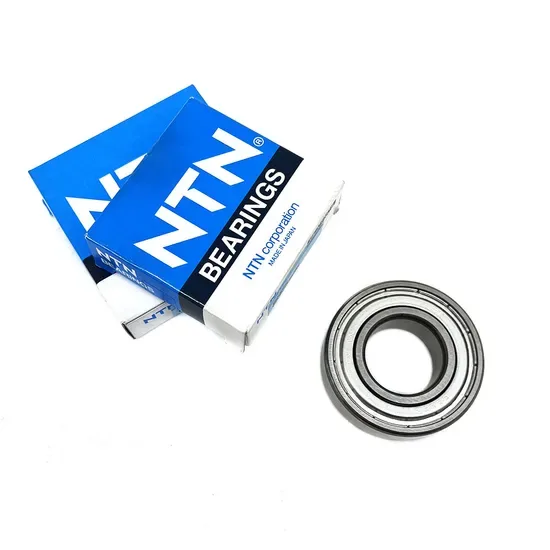
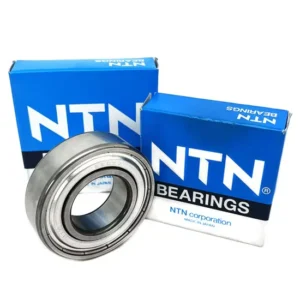
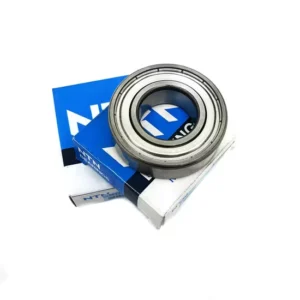
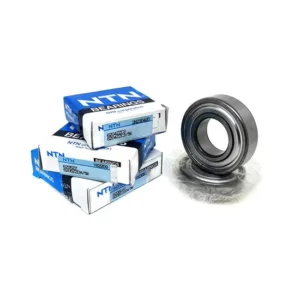
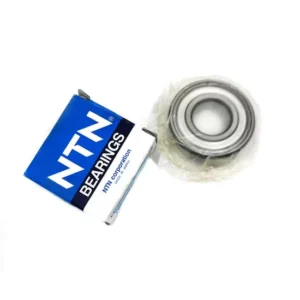
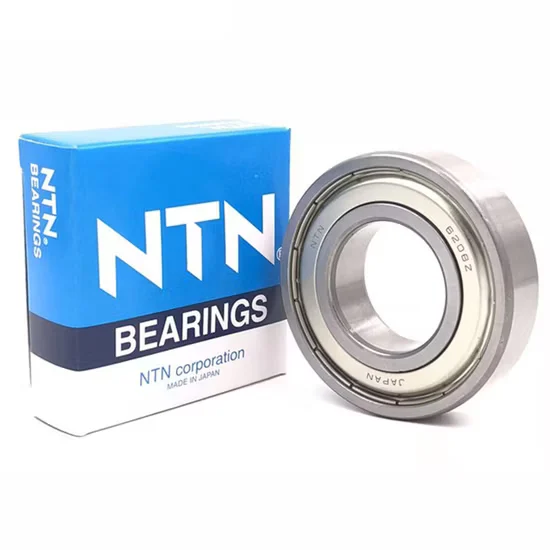
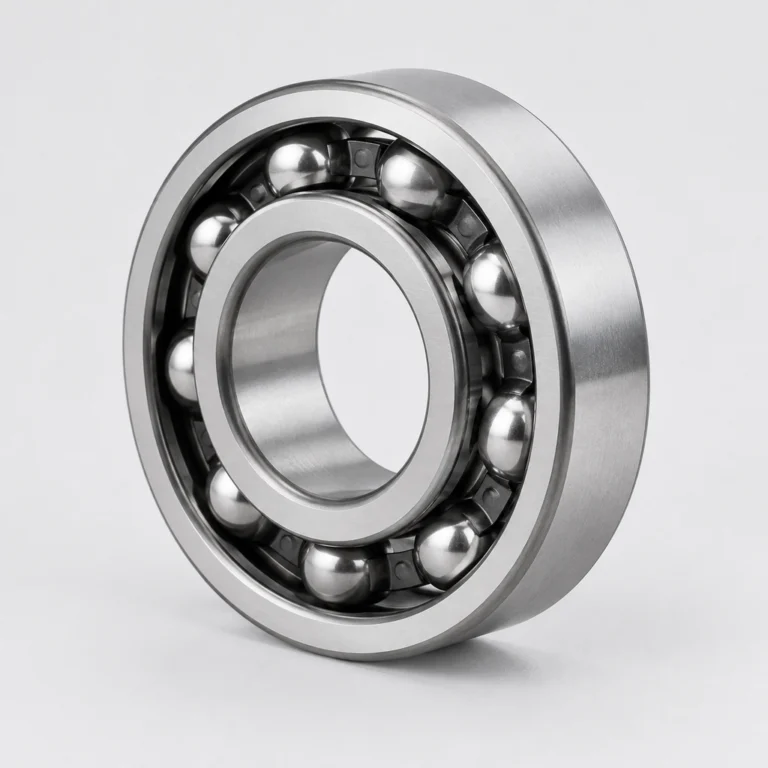
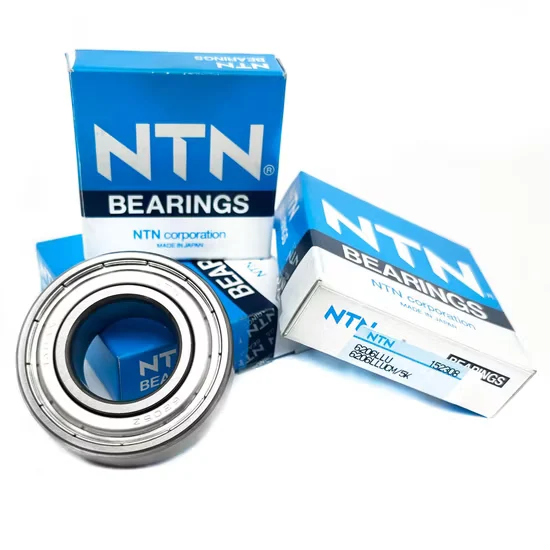
Official App QR Verification — Every X&S 626 deep groove ball bearing batch includes a scannable QR code linking directly to the manufacturer's authenticity database.
Technical Specifications
| Parameter | Value |
| Designation | 626 625 624 6304 6305 6306 6307 6209 6211 6212 621 |
| Product Type | Deep Groove Ball Bearing |
| Number of Rows | Single |
| Material | Bearing Steel |
| Load Direction | Radial Bearing |
| Lubrication | Grease or Oil |
| Feature | High Speed |
| Specification | Standard size |
| Origin | Shandong, China |
| Certification | ISO 9001 |
| HS Code | 8482102000 |
Note: Suffixes like 2RS or -2RS are unverified and require manufacturer catalog confirmation for this specific batch.
Application Suitability
| Industry | Typical Applications |
| Electric Motors | Rotor shaft support in standard induction motors |
| Pumps | Impeller shaft radial load management in centrifugal pumps |
| Conveyors | Idler roller rotation in bulk material handling systems |
| Gearboxes | High-speed input shaft support in industrial reducers |
| Household Appliances | Spindle rotation in washing machine drum assemblies |
Why Suffix Ass*ove Ball Bearing
Assuming seal types without verification causes immediate field failures.
In my years supplying agricultural and industrial motors in Shandong, I learned the hard way that mixing up open, shielded, and sealed variants leads to catastrophic dust ingestion. When a drawing calls for a sealed unit but an open variant is installed, particulate contamination destroys the raceway within weeks. The friction heat generated by incorrect seal contact can also degrade the lubricant prematurely. Sourcing the correct 626 625 624 6304 6305 6306 6307 6209 6211 6212 621 range requires strict verification of the exact sealing configuration to prevent unplanned downtime. We have seen entire harvest seasons lost because a single suffix letter was ignored during procurement. This is why we enforce rigid catalog cross-checks before any shipment leaves our facility.

Matching Radial Capacity to Motor and Pump Dynamics
The single-row architecture of this series efficiently handles the predominant radial loads found in electric motors and pump assemblies. By maintaining precise geometric tolerances, the X&S 626 deep groove ball bearing minimizes vibration at high rotational speeds, which is critical for reducing acoustic noise in household appliances and industrial gearboxes. Our sourcing protocol ensures that every unit meets the required dimensional standards before it reaches your assembly line. The deep raceway grooves are machined to accommodate slight axial displacements, providing operational stability even when the shaft experiences minor thermal expansion during continuous duty cycles. This inherent design flexibility makes it a reliable choice for diverse rotating equipment.
Managing High-Speed Thermal and Lubrication Variables
Operating at high speeds generates internal friction heat, which directly impacts the internal clearance and lubricant lifespan. Selecting between grease and oil lubrication depends entirely on the thermal dissipation capacity of your specific housing design and the operating temperature profile. Inadequate lubrication intervals or incorrect viscosity selection will accelerate wear, especially in environments with fluctuating ambient temperatures. Oil lubrication is often mandatory for open bearings in high-speed gearboxes to carry away heat, whereas grease is preferred for sealed motor bearings to simplify maintenance. Understanding these thermal dynamics is essential for maximizing the service life of the bearing in demanding industrial applications.
Decoding Material and Clearance Specifications
The use of standard bearing steel provides the necessary hardness for typical industrial radial loads, while alternative materials like ceramic or stainless steel variants remain available for specialized environments requiring corrosion resistance or electrical insulation. The single-row design optimizes the contact area for high-speed rotation, but it demands strict attention to the internal clearance class. Selecting the appropriate clearance ensures the bearing accommodates thermal expansion without inducing excessive preload during continuous motor operation. A standard clearance might suffice for ambient temperature pumps, but high-temperature motors require increased clearance to prevent raceway binding. Evaluating these material and geometric variables ensures the component performs reliably under your specific operational constraints.
The Compounding Financial Impact of Misapplication
Installing a standard clearance bearing in a high-temperature motor housing leads to clearance depletion and eventual seizure. This premature failure not only destroys the bearing but often damages the adjacent shaft and housing, resulting in catastrophic equipment damage and extended production halts. Adhering to ISO 281 guidelines for dynamic load rating calculations prevents these costly miscalculations and extends the operational lifecycle. Furthermore, ignoring the limiting speed specifications can cause cage failure due to excessive centrifugal forces. The true cost of the wrong choice extends far beyond the replacement part, encompassing labor, downtime, and secondary component damage.
Procurement Assurance for Critical Rotating Equipment
We maintain massive spot inventory covering thousands of standard part numbers, ensuring your urgent maintenance requirements are met without multi-week delays. Our cross-brand equivalent model consultation helps you align the X&S 626 deep groove ball bearing with existing OEM specifications accurately. Every shipment includes complete traceability documentation, and our technical selection support prevents the costly mistake of confusing open and sealed variants. Unlike standard distributors who merely move boxes, we verify the exact suffix and clearance requirements against your application data. This rigorous approach guarantees that the components you receive are perfectly suited for your specific machinery, eliminating the risk of field failures caused by procurement errors.
Documentation & Authenticity
- Certificate of Conformity confirming ISO 9001 quality management compliance for this batch.
- Original factory batch traceability records linking each unit to its production date.
- Official app QR verification codes for instant authenticity checks on delivery.
- Material inspection reports validating the bearing steel chemical composition.
- Dimensional and running accuracy inspection reports verifying standard size tolerances.
Storage, Handling & Mounting
- Store the open-type variants in original packaging with strict humidity control to prevent raceway corrosion.
- Use clean lint-free gloves when handling to avoid transferring acidic skin oils to the bearing steel surfaces.
- Apply induction heating for inner ring mounting to preserve the precise standard size bore diameter.
- Maintain strict separation between grease and oil lubricated batches to prevent cross-contamination during storage.
- Verify the single row ball arrangement orientation before pressing into the motor housing to avoid cage damage.
Engineering Data Required for Technical Review
To ensure precise model alignment, please provide your specific radial and axial load profiles along with the operating speed and temperature range. Sharing the OEM equipment nameplate data allows our engineering team to perform accurate cross-reference verification and identify any obsolete part numbers. Detailing the environmental exposure helps us confirm whether the standard bearing steel configuration is sufficient or if alternative materials are necessary. By supplying these critical operational parameters, you enable our technical staff to validate the dynamic load rating and recommend the optimal lubrication strategy for your specific deep groove ball bearing application.
Frequently Asked Questions
Q: How to choose between grease and oil lubrication for high-speed deep groove ball bearings?
A: Grease is typically preferred for sealed or shielded variants due to its retention properties and maintenance-free operation, while oil is selected for open bearings in high-speed applications requiring superior heat dissipation. The final decision depends on your housing design and relubrication capabilities.
Q: What are the cross-reference considerations for clearance and precision classes?
A: When cross-referencing, you must match not only the basic dimensions but also the internal clearance class and precision grade. A standard clearance bearing cannot safely replace a C3 clearance unit in high-temperature motor applications without risking thermal seizure and premature failure.
Q: How to verify the authenticity and traceability of the bearing batch?
A: Authenticity is verified through the official app QR codes provided with each shipment, which link directly to the manufacturer's database. Additionally, the original factory batch traceability documents and Certificate of Conformity ensure full supply chain transparency for your quality audits.
Q: What are the standard size tolerances and precision classes for these bearings?
A: These bearings are manufactured to standard size tolerances aligned with ISO 492 specifications for normal precision classes. The dimensional and running accuracy inspection reports provided with each order confirm compliance with these industry benchmarks, ensuring smooth installation and operation.
Q: How to select the appropriate seal or shield type for specific operating environments?
A: Shielded types offer low friction for high-speed applications with light dust, while contact seals provide superior moisture and heavy particulate exclusion at the cost of higher friction. Always verify the exact suffix designation to match your environmental exposure accurately.