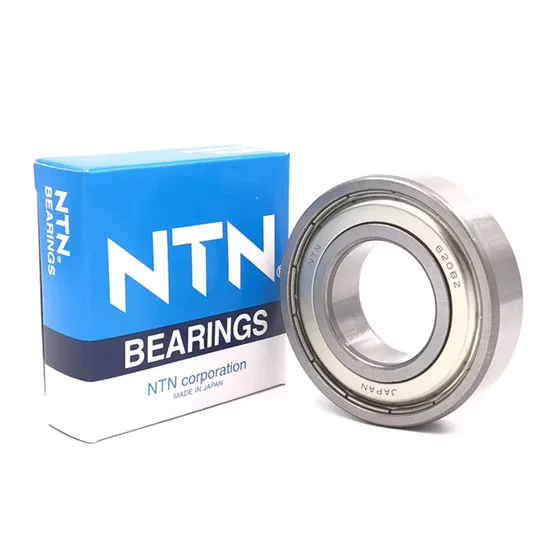
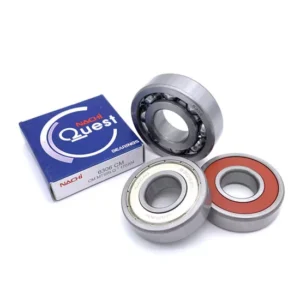
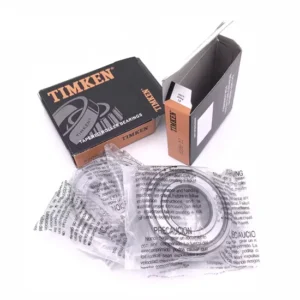
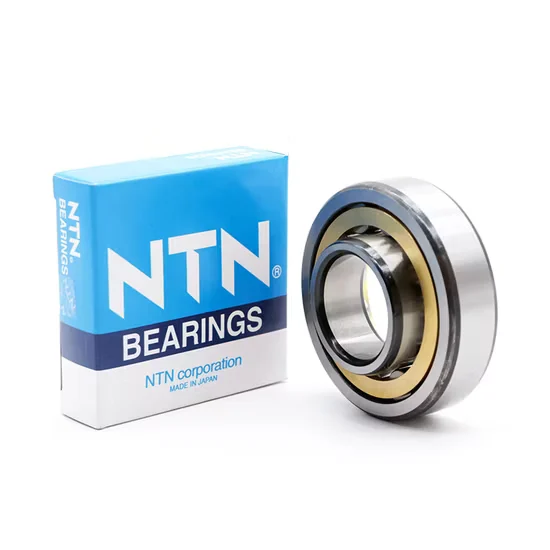
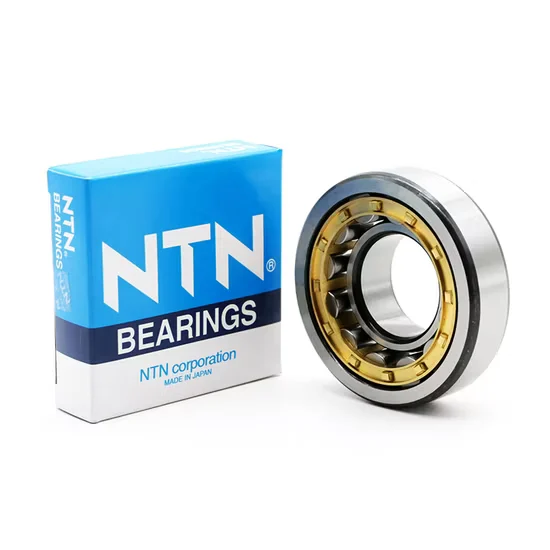
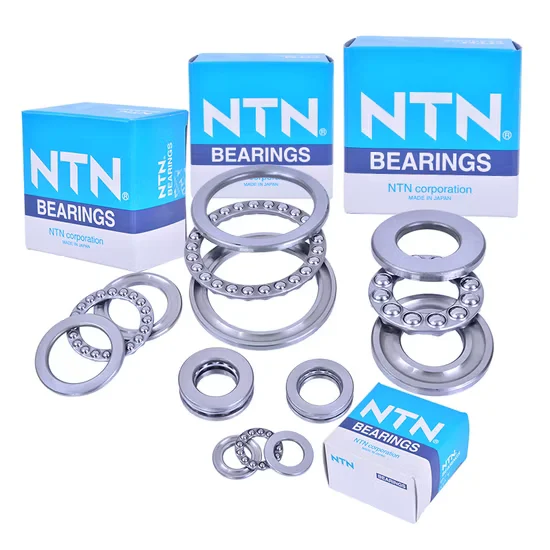
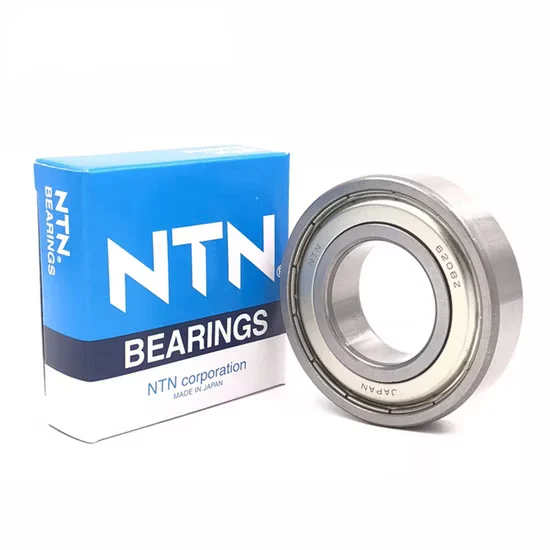
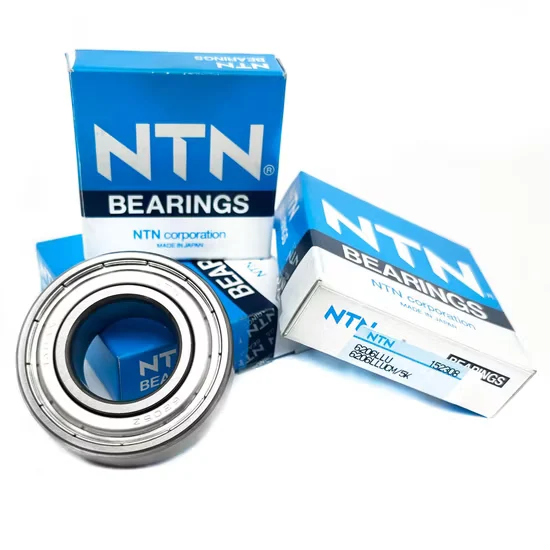
Authentic NTN Verification — Every NTN 6009-zn 6009-znr deep groove ball bearing ships with scannable QR codes linking directly to the manufacturer's official validation database.
Technical Specifications
| Parameter | Value |
| Designation | NTN 6009-zn 6009-znr |
| Bearing Type | Deep Groove Ball Bearing |
| Bore Diameter (d) | 45 mm |
| Outside Diameter (D) | 75 mm |
| Width (B) | 16 mm |
| Material | Bearing Steel |
| Number of Rows | Single |
| Load Direction | Radial Bearing |
| Aligning | Non-Aligning Bearing |
| Separated | Unseparated |
| Contact Angle | 0° |
| HS Code | 8482102000 |
Note: The suffixes zn and znr are unverified and require manufacturer catalog confirmation before final procurement.
Application Suitability
| Industry | Typical Applications |
| Electric Motors | Rotor shaft support requiring precise radial alignment |
| Pumps | Impeller shaft stabilization in continuous fluid transfer systems |
| Gearboxes | Intermediate shaft mounting for torque transmission |
| Conveyors | Drive roller journals in material handling lines |
Preventing Assembly Failures with the Correct NTN 6009-zn 6009-znr deep groove ball bearing Configuration
A missing snap ring groove turns a standard replacement into an immediate line stoppage.
Early in my career handling export documentation in Dongguan, a simple oversight caused a massive batch rejection. A client requested a snap ring variant for electric motor housings, but the shipment only included standard shielded units. The retaining rings simply would not seat during final assembly, forcing a complete return and severe financial penalties. Now, when dealing with specialized configurations, cross-checking the exact dimensional drawings is mandatory to prevent these costly integration failures. Industrial buyers often assume that basic dimension equivalence guarantees physical interchangeability, but outer ring profile variations dictate the entire axial locating strategy. Ignoring these subtle geometric differences leads to catastrophic housing damage when the equipment is subjected to dynamic axial thrust.

Matching Radial Load Demands in Continuous Duty Equipment
Industrial drive systems demand consistent radial support without axial deviation. The NTN 6009-zn 6009-znr deep groove ball bearing provides the rigid shaft stabilization needed for high-speed electric motors and gearboxes. Our sourcing network ensures these specific single-row variants are consolidated with other required MRO components, allowing mixed-brand project orders to ship in a single container. This consolidation capability significantly reduces international freight complexity for global maintenance teams. By securing the exact geometric profile required for your specific drive train, you eliminate the micro-vibrations that typically accelerate seal degradation in continuous duty applications.
Navigating Thermal Expansion and Contamination in Drive Housings
Continuous operation in pump and conveyor applications generates substantial friction heat, altering internal clearance if the initial selection ignores thermal expansion. While available bearing steel options handle typical industrial loads, environments with heavy particulate exposure demand careful evaluation of seal friction versus contamination ingress. Selecting the appropriate lubrication interval prevents premature raceway degradation and maintains the structural integrity of the rolling elements. Furthermore, verifying the exact outer ring profile ensures the housing tolerances align perfectly with the installed components. When thermal gradients fluctuate rapidly, the rigid non-aligning structure transfers these dimensional shifts directly to the shaft, making precise initial clearance selection absolutely critical for long-term reliability.
Decoding the Single-Row Non-Aligning Architecture
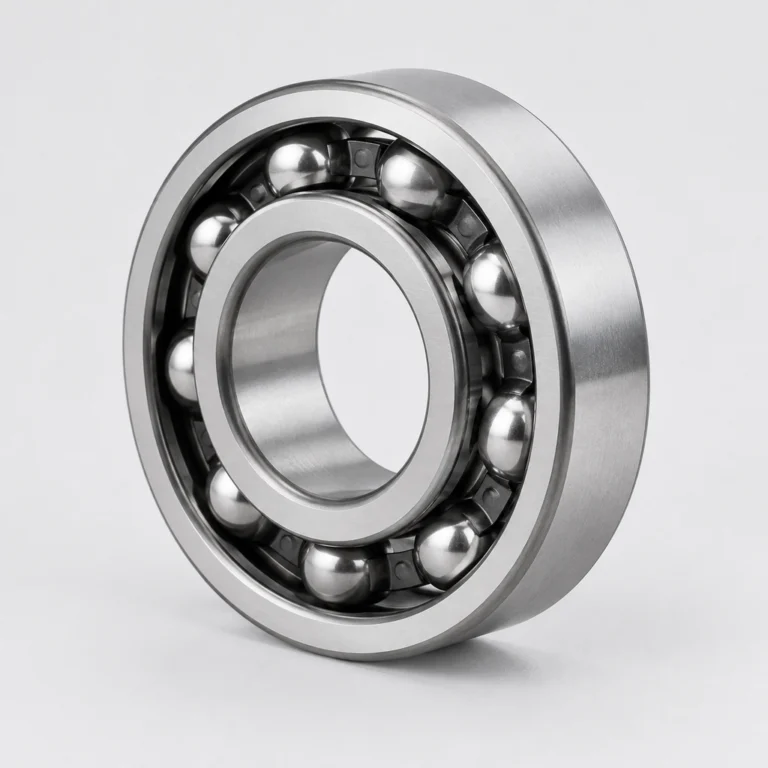
The 45x75x16mm footprint defines a compact envelope suitable for tight motor housings. A zero-degree contact angle ensures the geometry is strictly optimized for pure radial loads, preventing unwanted axial thrust transfer. The unseparated, non-aligning design mandates precise shaft and housing machining, as the rigid structure cannot compensate for angular misalignment. Available in bearing steel variants, the material offers the necessary core hardness for continuous rotational fatigue resistance. When evaluating snap ring variants, the exact groove depth and ring thickness dictate the axial positioning limits within the assembly. This strict geometric constraint means that any deviation in the housing bore diameter will immediately compromise the radial support, leading to localized stress concentrations that rapidly initiate spalling on the raceway surface.
The Cascading Financial Impact of Incorrect Housing Fits
Installing a standard outer ring into a housing machined for a snap ring creates localized stress concentrations that rapidly accelerate fatigue. According to failure analysis frameworks like ISO 15243, improper axial locating leads to ring creep and severe housing wear. This unplanned downtime cascades through the production schedule, voiding equipment warranties and requiring expensive secondary machining to repair the damaged bore. The financial burden extends far beyond the replacement component cost, encompassing lost production revenue, emergency freight charges, and the labor hours required to dismantle the affected drive train. Addressing these geometric requirements during the initial procurement phase is the only effective strategy to mitigate these compounding operational losses.
Securing Exact Configurations Through Rigorous Technical Vetting
Sourcing specialized variants requires more than just checking a stock list; it demands technical verification of every suffix. We provide complete batch traceability documentation, ensuring the units you receive match the exact factory production records. Our engineering team conducts cross-brand equivalent model consultations, verifying dimensional interchangeability before dispatch. With flexible consolidation options, we combine emergency single-unit spares with full-container bulk orders to optimize your freight costs. Every shipment includes thorough inspection services to confirm physical dimensions against the manufacturer's catalogs. This rigorous vetting process specifically targets the high-risk suffix variations that frequently cause assembly rejections, ensuring your maintenance team receives components that physically integrate without requiring on-site modifications.
Documentation & Authenticity
- Certificate of Conformity validating the specific 45x75x16mm dimensional tolerances.
- Original batch traceability records linking the steel heat number to the finished rings.
- Official app QR codes for immediate field verification of the manufacturer's origin data.
- Material inspection reports confirming the metallurgical composition of the bearing steel.
- Running accuracy inspection reports verifying radial internal clearance before dispatch.
Storage, Handling & Mounting
- Retain original packaging until motor assembly to protect the 45mm bore from humidity.
- Use induction heating on the inner ring to preserve the precise 45mm bore tolerance.
- Verify the snap ring groove orientation before pressing the outer ring into pump housings.
- Avoid carbon steel tools near the raceways to prevent surface indentation on the bearing steel.
- Store in climate-controlled environments to prevent condensation inside the single-row cage structure.
Initiating the Technical Review Process
To ensure the selected configuration perfectly matches your application, please share the specific radial loads, operational speeds, and housing dimensional drawings. Providing the original equipment manufacturer part numbers allows our engineering team to perform a precise cross-reference check. Detailing the ambient temperature and contamination levels helps us confirm whether the standard clearance class is adequate for your thermal expansion requirements. Supplying these operational parameters enables our technical specialists to calculate the expected L10 fatigue life and recommend the optimal relubrication strategy for your specific duty cycle.
Frequently Asked Questions
Q: How can I verify the authenticity of these specific units?
A: You can scan the QR codes printed on the individual packaging using the manufacturer's official mobile application. This directly queries the central database to confirm the production batch, origin facility, and dimensional specifications, ensuring complete traceability for your quality assurance records.
Q: What do the unverified suffixes mean for my assembly?
A: These specific suffix designations indicate potential variations in outer ring profiles, such as snap ring grooves, which require direct confirmation against the official engineering catalog. Procuring the exact variant is critical to ensure the retaining hardware seats correctly within your motor or gearbox housing.
Q: How do I determine the correct clearance class?
A: The optimal internal clearance depends on your operational temperature gradient and the interference fit applied during mounting. By providing your specific shaft tolerances and expected thermal expansion data, our technical team can calculate the required clearance to prevent internal preload under continuous operating conditions.
Q: Can this model be cross-referenced with other premium brands?
A: Yes, the basic 45x75x16mm dimensions align with standard international sizing, allowing cross-reference to equivalent models from other major manufacturers. However, you must verify that the specific outer ring profile and snap ring dimensions match exactly to ensure proper axial location in your existing housings.
Q: What are the recommended lubrication practices?
A: For open or shielded variants, the lubrication interval depends on the rotational speed and operating temperature of your specific equipment. We recommend following the manufacturer's relubrication guidelines based on your actual duty cycle to maintain the protective film thickness and prevent premature raceway wear.