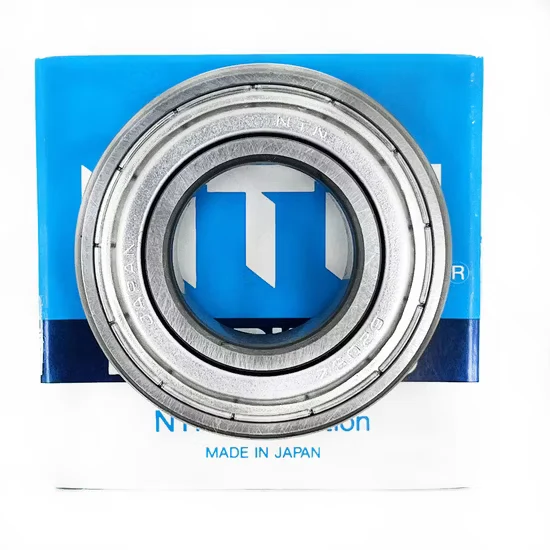
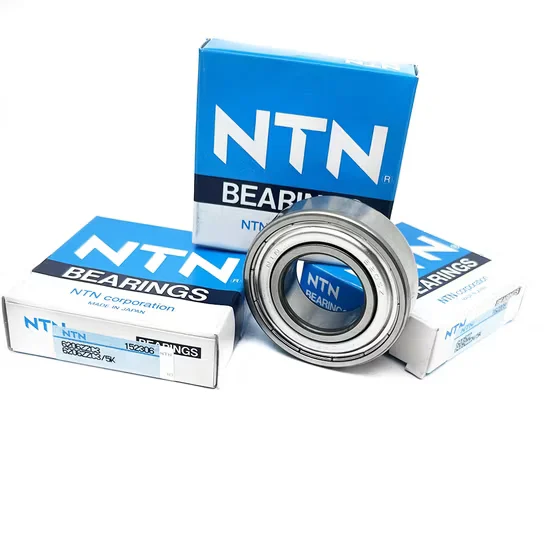
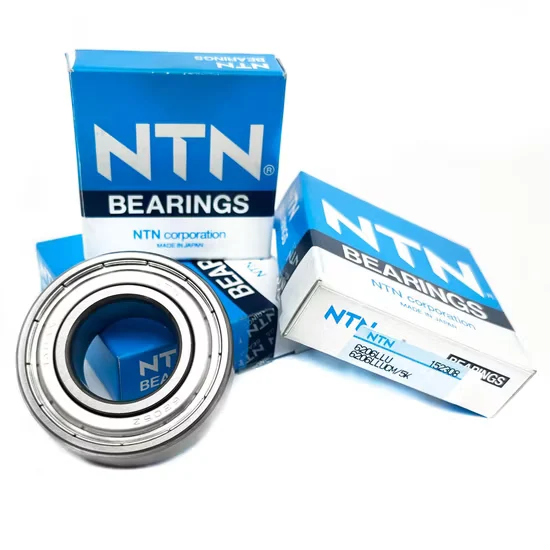
Mixed-Brand Sourcing — Consolidate this Japanese tapered roller bearing with European or domestic lines in a single shipment without juggling multiple vendors.
Technical Specifications
| Parameter | Value |
| Designation | NTN 32906 |
| Bearing Type | Tapered Roller Bearing |
| Bore Diameter (d) | 30 mm |
| Outside Diameter (D) | 47 mm |
| Width (T) | 12 mm |
| Precision Class | P0, P6, P5, P4, P2 |
| Vibration Class | Z1V1, Z2V2, Z3V3 |
| Lubrication | Grease or Oil |
| Origin | Japan |
Application Suitability
| Industry | Typical Applications |
| Automotive | Wheel hub assemblies and steering knuckle supports |
| Heavy Transport | Truck axle differentials and final drives |
| Industrial Machinery | Reduction gearboxes and power transmission shafts |
| Marine | Propulsion drives and deck machinery gear trains |
Why Gearbox Heat Destroys the NTN 32906 Tapered Roller Bearing
Thermal expansion miscalculations trap the rollers and cause catastrophic seizure.
I have torn down industrial reducers where the internal temperature spiked during continuous operation, turning the rolling elements completely black and destroying the raceways. When the initial internal clearance is not correctly matched to the operating thermal profile of the specific machinery, the components bind together under heavy combined loads. This specific failure mode accounts for a significant share of premature failures in heavy-duty transmission systems, often mimicking lubrication starvation. Engineers frequently overlook how the differential expansion rates between the shaft and the housing alter the internal geometry once the equipment reaches its steady-state operating temperature.

Aligning the NTN 32906 Tapered Roller Bearing with Drivetrain Loads
Drivetrain applications demand components that handle combined radial and axial forces without deflecting under severe shock loads. The NTN 32906 tapered roller bearing achieves this through its optimized contact angle and rigid cage design, distributing forces evenly across the rolling elements. Our engineering team evaluates your specific load spectra to ensure the selected precision and vibration classes perfectly match your gearbox or wheel hub requirements. By analyzing the exact force vectors, we prevent edge loading that typically plagues mismatched components in heavy transport axles and marine propulsion drives.
Managing Thermal and Contamination Challenges in Gearboxes
Industrial gearboxes subject these components to fluctuating combined loads and elevated operating temperatures that continuously alter internal geometry and clearances. Selecting the appropriate lubrication method is absolutely critical, as oil circulation dissipates heat much more effectively in high-speed scenarios, while grease suits sealed, low-maintenance hub assemblies. Furthermore, inadequate sealing allows metallic wear particles and external debris to enter the raceway, drastically accelerating surface fatigue and spalling. Proper installation practices must also account for thermal expansion to prevent internal preload from exceeding safe limits during the initial run-in phase. Maintenance teams must strictly adhere to recommended relubrication intervals to flush out degraded fluids and maintain the protective elastohydrodynamic film.
Decoding Precision and Vibration Tolerances for Critical Assemblies
The available precision classes range from standard P0 up to ultra-precise P2, directly influencing the rotational accuracy and noise levels of the final assembly. Higher precision grades minimize radial and axial runout, which is essential for high-speed automotive wheel hubs where microscopic vibration translates into noticeable cabin noise and steering feedback. Similarly, the vibration classes (Z1V1 through Z3V3) dictate the acceptable limits for acoustic emissions and dynamic imbalances during continuous operation. Selecting a Z3V3 rating ensures the smoothest possible operation for sensitive industrial gearboxes and precision machine tools. The 30 mm bore and 47 mm outside diameter provide a highly compact footprint for space-constrained transmission designs without sacrificing load capacity. Lubrication compatibility with both grease and oil allows maintenance teams to efficiently align the component with existing facility protocols and automated lubrication systems.
The Financial Impact of Incorrect Clearance and Precision Selection
Specifying the wrong internal clearance for a high-temperature environment inevitably leads to excessive preload once the machinery reaches its normal operating threshold. This severe binding generates immense friction and localized heat, resulting in unplanned downtime and catastrophic damage to the surrounding gearbox housing and shafts. Replacing a seized component often requires extensive, time-consuming machining of the shaft and bore, completely voiding original equipment warranties and delaying production schedules. Following the rigorous failure analysis frameworks outlined in international standards helps engineering teams prevent these costly secondary damages and identify root causes accurately. Ignoring these subtle specification details transforms a minor maintenance task into a major capital expenditure.
Securing Authentic Japanese Components for Critical Drivetrains
Sourcing genuine Japanese tapered roller bearings requires strict verification protocols to avoid counterfeit parts that inevitably fail under combined loads. We provide complete batch traceability documentation for every single unit, ensuring the metallurgical consistency required for heavy transport axles and demanding marine drives. Our flexible consolidation services allow you to mix this specific model with European or domestic alternatives in a single container, optimizing your freight costs and simplifying customs clearance. We also offer comprehensive cross-brand equivalent model consultation if you need to substitute unavailable part numbers without compromising drivetrain integrity or voiding equipment warranties. Furthermore, our dedicated technical support team assists with detailed failure analysis should unexpected operational issues arise in your industrial gearboxes, ensuring long-term reliability.
Documentation & Authenticity
- Certificate of Conformity verifying the Japanese origin and manufacturing batch.
- Original batch traceability records linking the component to the factory production run.
- Official manufacturer app QR code authentication for anti-counterfeit verification.
- Dimensional inspection reports confirming the 30x47x12 mm tolerances for the ordered precision class.
- Material test certificates validating the metallurgical properties of the cup and cone.
Storage, Handling & Mounting
- Store in original packaging to protect the precision-machined 30 mm bore from humidity and corrosion.
- Maintain consistent warehouse temperatures to prevent condensation inside the Z3V3 rated components.
- Use clean gloves during handling to avoid transferring acidic skin oils to the high-precision P4 raceways.
- Apply induction heating for the inner ring installation to preserve the specified internal clearance.
- Verify the lubrication type matches the facility protocol before introducing external grease or oil.
Preparing Your Technical Requirements for Accurate Quotation
To ensure accurate selection and reliable L10 life calculation, please share your specific radial and axial load profiles along with operating speeds and ambient temperatures. Providing the original equipment manufacturer part numbers allows our engineers to perform precise cross-reference verification and confirm dimensional interchangeability. Detail your installation space constraints and environmental exposure so we can recommend the optimal precision and vibration class for your specific application. Supplying this comprehensive data enables our technical team to validate the selection for the NTN 32906 tapered roller bearing and prevent costly field failures.
Frequently Asked Questions
Q: How can I verify the authenticity of the NTN 32906 tapered roller bearing through authorized channels?
A: You can verify authenticity by scanning the QR code on the packaging using the official manufacturer application. Additionally, we supply original batch traceability documentation and certificates of conformity that link the specific unit back to the Japanese production facility, ensuring complete supply chain transparency and protecting your equipment from counterfeit risks.
Q: What are the practical differences between P0, P6, P5, P4, and P2 precision ratings for tapered roller bearings?
A: Lower grades like P0 suit general industrial gearboxes where standard tolerances are acceptable. Higher ratings such as P4 and P2 minimize radial and axial runout, which is critical for high-speed automotive wheel hubs to prevent vibration and noise. Selecting the right class ensures optimal rotational accuracy and extends the operational lifespan of precision machinery.
Q: Grease vs. oil lubrication: which is recommended for specific operating conditions and relubrication cycles?
A: Oil lubrication is generally preferred for high-speed industrial gearboxes because it dissipates heat effectively and flushes away wear particles. Grease is ideal for automotive wheel hubs or sealed applications where maintenance access is limited and relubrication cycles are extended. The choice depends on your operating temperature, speed, and contamination exposure levels.
Q: What cross-reference models are equivalent to this bearing and what specifications must align perfectly?
A: While we can consult on cross-brand equivalents from major global manufacturers, any substitution must perfectly align the 30 mm bore, 47 mm outside diameter, and 12 mm width. More importantly, the internal contact angle and load-carrying capacity must match the original design to prevent premature failure in critical drivetrain and gearbox applications.