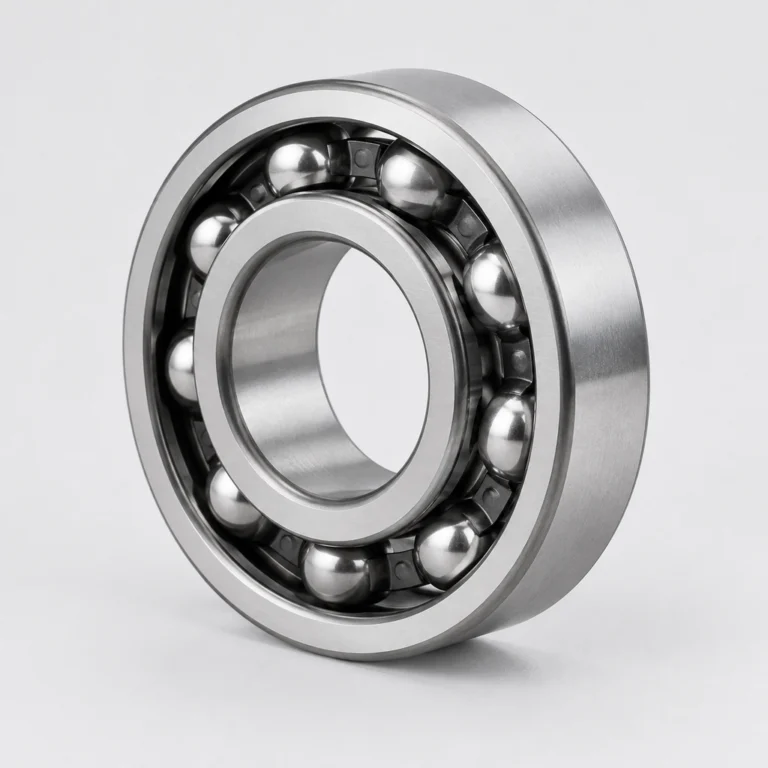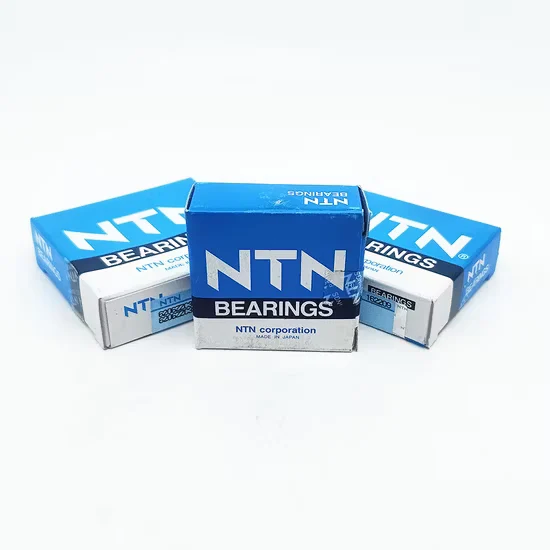
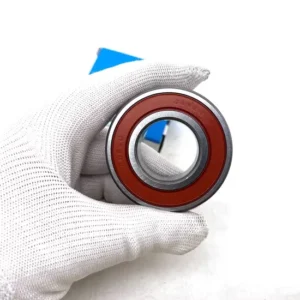
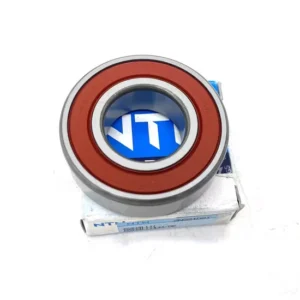
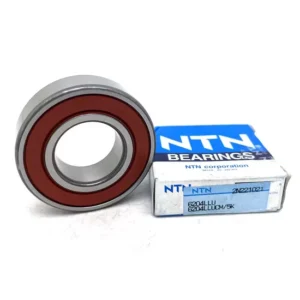
Mixed-Brand Consolidation — Source your X&S 6204ZZC3 deep groove ball bearing alongside SKF or FAG equivalents in one unified shipment, eliminating multi-vendor coordination.
Technical Specifications
| Parameter | Value |
|---|---|
| Designation | 6204ZZC3 |
| Bearing Type | Deep Groove Ball Bearing |
| Rows Number | Single Row |
| Bore Diameter (d) | 20 mm |
| Outside Diameter (D) | 47 mm |
| Width (B) | 14 mm |
| Seal or Shield Type | Zz, 2RS, or Open options |
| Clearance Class | C3 |
| Precision Class | P0, P6, P5, P4 options |
| Material | Bearing Steel |
| Lubrication | Grease or Oil |
| Vibration Level | Z1V1 to Z4V4 options |
| Origin | Shandong, China |
Note: The ZZ suffix is an unverified designation requiring manufacturer catalog confirmation.
Application Suitability
| Industry | Typical Applications |
|---|---|
| Textile Manufacturing | Industrial sewing machine main shafts and high-speed bobbin winders |
| Power Transmission | Small electric motors and precision reduction gearboxes |
| Material Handling | Conveyor belt drive rollers and centrifugal pump impellers |
Why Sewing Machine Spindles Destroy Standard Clearance Bearings
Thermal expansion at high RPM turns standard internal clearance into a catastrophic preload.
I learned this the hard way early in my career while working the floor at Chicago trade shows. A client needed standard shields for a textile order, but I shipped units with C3 clearance to save time. The excessive internal play caused severe spindle runout at high speeds, tangling and snapping the sewing threads instantly. Since that disaster, I scrutinize every suffix on deep groove ball bearings, ensuring the X&S 6204ZZC3 deep groove ball bearing is only applied where its specific thermal and dynamic traits match the machine’s operational reality [NEED_CITE: bearing internal clearance selection guidelines for high-speed spindles].
Aligning Radial Capacity with Textile Machinery Dynamics
When outfitting high-speed textile equipment, selecting the correct X&S 6204ZZC3 deep groove ball bearing ensures the radial load capacity perfectly aligns with the spindle’s rotational forces. Our engineering team provides cross-brand equivalent consultation, helping you verify if this specific Shandong-manufactured model meets the exact dimensional and dynamic requirements of your legacy sewing machines or modern automated looms.
Managing Heat Generation and Lubrication Breakdown
Continuous duty cycles in electric motors and gearboxes generate significant internal friction, demanding careful attention to lubrication and thermal limits. Grease-lubricated variants offer maintenance-free operation for enclosed housings, while oil-lubricated options dissipate heat more effectively in open or high-speed setups. Selecting the appropriate seal type prevents contaminant ingress without introducing excessive friction that could degrade the lubricant prematurely [NEED_CITE: lubrication failure modes in deep groove ball bearings].
Interpreting Precision Tolerances and Vibration Signatures
The available precision ratings from P0 to P4 dictate the dimensional accuracy and running smoothness of the bearing. For industrial sewing machines where needle positioning is critical, higher precision classes minimize radial runout. Furthermore, the vibration grades ranging from Z1V1 to Z4V4 indicate the acoustic and dynamic smoothness of the raceways. A Z4V4 rating guarantees exceptionally quiet operation, which is vital for reducing operator fatigue in large-scale garment manufacturing facilities. The C3 clearance class specifically accommodates the thermal expansion of the inner ring when it runs hotter than the outer housing during sustained high-speed operation.
The Hidden Downtime Cost of Ignoring Suffix Details
Misinterpreting shield codes or clearance classes inevitably leads to premature failure and unplanned downtime. Installing a standard clearance unit in a high-speed, high-heat environment causes the bearing to seize as the internal gaps close. According to failure analysis frameworks like ISO 15243, improper clearance selection is a primary driver of smearing and catastrophic raceway damage. Such mistakes void equipment warranties and halt entire production lines, proving that meticulous suffix verification is far cheaper than replacing ruined textile machinery spindles [NEED_CITE: rolling bearing failure mode classification per ISO 15243].
How Our Sourcing Strategy Prevents Suffix Mismatches
We maintain massive spot inventory covering thousands of standard part numbers, ensuring you get the exact C3 clearance and shield configuration you need without waiting weeks. Our ISO-compliant quality assurance includes strict verification of the Shandong origin and bearing steel metallurgy before dispatch. Because we understand that mixing up shield types can ruin high-speed applications, our technical selection support cross-references your OEM manuals to prevent costly errors. We offer flexible MOQs, meaning you can order a single emergency spare or a full container consolidation without compromising on traceability.
Documentation & Authenticity
- Certificate of Conformity verifying the Shandong manufacturing origin and bearing steel composition.
- Dimensional inspection reports confirming P0 to P4 tolerance bands before shipment.
- Vibration and noise test certificates validating the specified Z1V1 to Z4V4 grades.
- Original batch traceability documents linking the C3 clearance units to their production run.
- Material testing records ensuring the bearing steel meets required hardness standards.
Storage, Handling & Mounting
- Keep the Zz or 2RS shielded units in their original packaging to prevent moisture from compromising the factory-applied grease.
- Use clean gloves when handling open-type variants to avoid skin oils causing localized corrosion on the bearing steel raceways.
- Store C3 clearance bearings in a temperature-controlled environment to prevent thermal shock before mounting.
- Avoid using carbon steel tools near the precision P4 components to prevent cross-contamination and surface scoring.
- Ensure the industrial sewing machine spindle housing is perfectly aligned to prevent binding the single-row design during press-fitting.
Preparing Your Technical Data for Cross-Reference Verification
To ensure optimal performance, share your specific radial and axial load profiles, operating temperatures, and maximum RPM with our technical team. Providing the original OEM equipment numbers allows us to perform precise cross-reference checks against international equivalents. Detailing the environmental exposure, such as textile dust or humidity, helps us recommend the most suitable seal type and lubrication strategy for your exact application.
Frequently Asked Questions
Q: How do I choose between Zz, 2RS, and open seal types for my sewing machine?
A: Zz metal shields provide excellent dust protection with minimal friction, making them ideal for high-speed sewing machine spindles. Rubber 2RS seals offer superior moisture and fine particle resistance but generate slightly more friction. Open types are best when the housing provides external sealing and allows for regular relubrication.
Q: What is the practical difference between P0 and P4 precision ratings?
A: P0 is the standard commercial grade suitable for general electric motors and conveyors. P4 offers extremely tight dimensional tolerances and minimal radial runout, which is essential for high-speed textile machinery where precise needle alignment and exceptionally quiet operation are strictly required to prevent fabric defects.
Q: How do Z1V1 to Z4V4 vibration levels affect operational smoothness?
A: These codes measure the acoustic and dynamic vibration of the bearing. Z1V1 represents standard commercial smoothness, while Z4V4 indicates ultra-precise raceway finishing. For industrial sewing machines, specifying Z3V3 or Z4V4 significantly reduces high-frequency spindle vibrations, resulting in smoother stitch formation and less operator fatigue.
Q: How can I find cross-reference equivalents for this specific model?
A: Our engineering team can map this designation to equivalent models from major international brands like SKF, FAG, or NSK. By providing your exact load, speed, and dimensional requirements, we verify the interchangeability of the C3 clearance and shield configurations to ensure seamless integration into your existing maintenance inventory.
Q: How do I determine the correct lubrication for high-speed applications?
A: High-speed applications typically require low-viscosity oil or specialized high-speed grease to minimize churning friction and heat generation. Share your exact RPM and operating temperature with us, and we will recommend the optimal factory-filled lubricant or provide relubrication intervals for open-type variants to maximize service life.