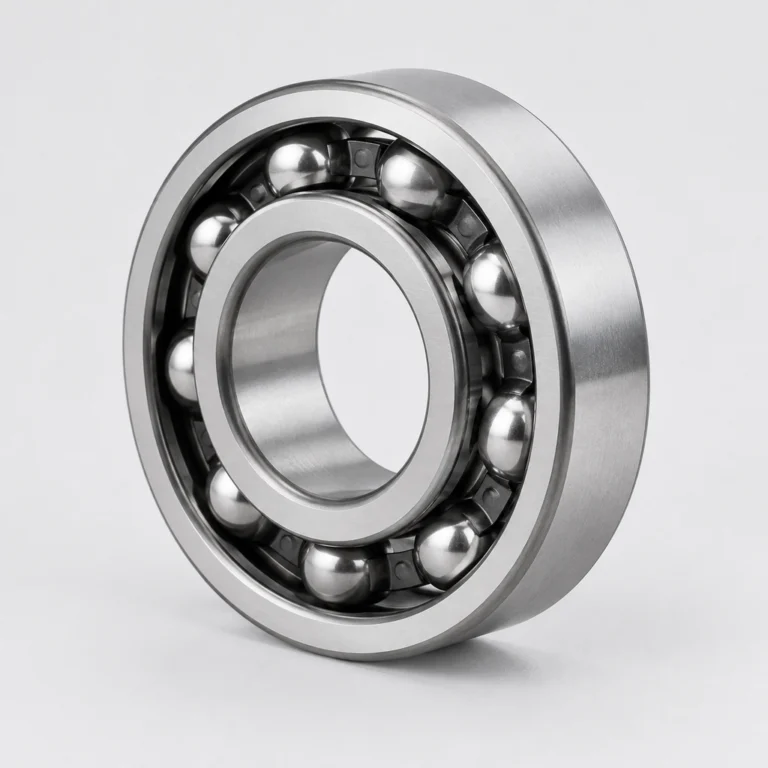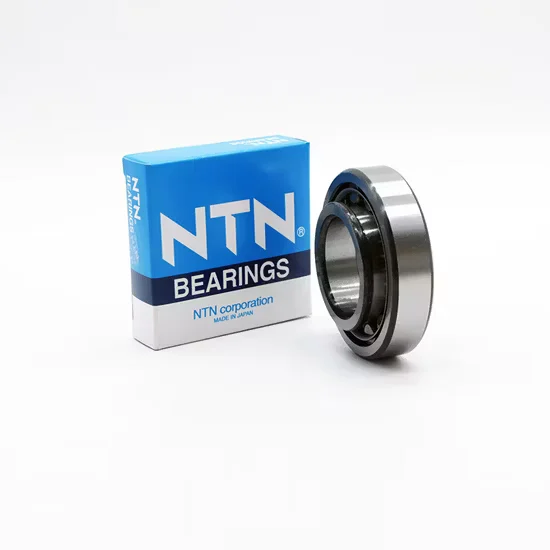

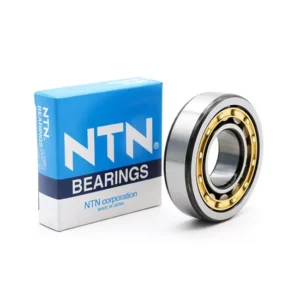
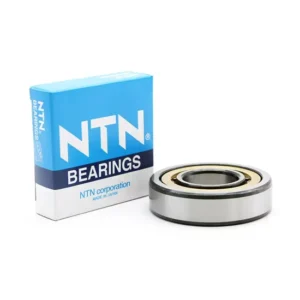
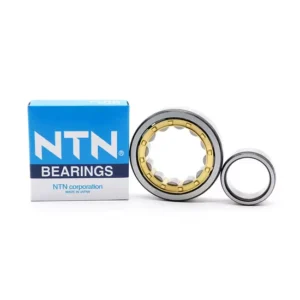
Original Batch Traceability — Every N314E unit ships with manufacturer lot records verifying its exact production run and metallurgical origin.
Technical Specifications
| Parameter | Value |
|---|---|
| Designation | N314E |
| Bearing Type | Cylindrical Roller Bearing |
| Bore Diameter (d) | 70 mm |
| Outside Diameter (D) | 150 mm |
| Width (B) | 35 mm |
| Material | Available in bearing steel or specialized variants |
| Seal or Shield Type | Open |
| Precision Class | P0 / P6 / P5 / P4 / P2 options |
| Arrangement | Single Row |
Application Suitability
| Industry | Typical Applications |
|---|---|
| Heavy Machinery | Main drive shafts in heavy-duty gearboxes |
| Metal Processing | Work roll and backup roll necks in rolling mills |
| Transportation | Traction motor suspensions |
Why Cage Material Dictates Survival in High-Vibration Gearboxes
Stamped steel cages shatter under sustained resonance, making machined brass or reinforced polyamide mandatory for heavy-duty setups.
I learned this the hard way in Chicago when a vibrating screen application tore through standard cages on cylindrical rollers, causing catastrophic lockups within weeks. When upgrading to enhanced capacity designs, ignoring the cage specification turns a premium component into a liability. Procurement teams often focus purely on dynamic load ratings, missing that [NEED_CITE: rolling bearing failure mode classification per ISO 15243] frequently traces back to cage fatigue rather than raceway spalling. High-vibration environments introduce cyclical stresses that standard stamped steel simply cannot absorb, leading to early fracture and subsequent roller skewing. To prevent this, engineers must explicitly verify the cage material and design, ensuring it matches the intense mechanical shocks and rotational speeds inherent in modern heavy industrial drives.
Matching Enhanced Capacity to Radial Shock Loads
The N314E cylindrical roller bearing delivers optimized load distribution across its line contact zone, handling the intense radial shocks typical in rolling mills and heavy gearboxes. By specifying this enhanced capacity variant, engineering teams secure a noticeably higher radial load rating without altering the standard 70x150x35mm dimensional envelope. Our sourcing network ensures you receive genuine units with full traceability, avoiding the inflated costs of direct official channels while maintaining strict ISO compliance. This approach guarantees that the internal geometry truly reflects the enhanced design, preventing the all-too-common issue of receiving standard-capacity substitutes that fail prematurely under peak operational loads.
Navigating Lubrication and Thermal Expansion in Open Designs
Open-type configurations demand precise lubrication strategies, as the absence of integrated seals exposes the rolling elements to gear oil splash or external grease circuits. In high-temperature gearbox environments, thermal expansion alters internal clearances, making the initial clearance selection absolutely critical to prevent preload binding during thermal steady-state operations. Contaminant ingress remains a constant threat, requiring reliable external sealing solutions to protect the unprotected raceways [NEED_CITE: contamination impact on bearing life per ISO 281]. Proper oil viscosity, filtration levels, and regular oil analysis are non-negotiable to sustain the high-speed capabilities of this single-row arrangement. Furthermore, the lack of contact seals eliminates friction-induced heat generation, allowing the bearing to operate at higher limiting speeds provided the external lubrication system delivers adequate flow and cooling to the contact zones.
Decoding the ‘E’ Suffix and Precision Tolerances
The ‘E’ suffix signifies an enhanced internal geometry, featuring optimized roller profiles and a high-capacity cage design that maximizes the load-carrying cross-section. This structural reinforcement directly translates to extended service life under heavy radial loads, as the modified roller end flanges reduce edge stresses. Regarding precision, selecting between P0 and P2 classes depends entirely on the rotational accuracy required by the traction motor or gearbox shaft. While standard P0 suffices for general industrial drives, high-speed traction applications demand tighter P4 or P2 tolerances to minimize vibration and heat generation. Furthermore, the separable design allows the inner ring to be mounted independently, simplifying interference fit installations on tight-tolerance shafts. This separation also facilitates easier maintenance inspections, as the outer ring with the roller and cage assembly can be removed without disturbing the inner ring’s shaft fit.
The Financial Toll of Mismatched Internal Clearances
Specifying standard clearance for an application with significant thermal gradients inevitably leads to internal preload, accelerating roller skidding and raceway smearing. Such misalignments trigger unplanned downtime and catastrophic damage to adjacent gearbox housings, voiding equipment warranties and escalating repair costs exponentially. According to [NEED_CITE: bearing damage and failure analysis per ISO 15243], improper clearance selection is a primary driver of premature fatigue and structural collapse. Replacing a failed unit involves not just the component cost, but massive financial losses from halted production lines, emergency freight expenses, and potential safety hazards. Engineers must rigorously calculate the thermal expansion of both the shaft and housing to specify the correct initial clearance, ensuring the bearing operates with optimal internal geometry under actual working temperatures.
Securing Genuine Enhanced Capacity Bearings Without the Markup
Sourcing the exact cage material and precision class for the N314E cylindrical roller bearing is notoriously difficult through fragmented distributors who often mix up suffixes. We consolidate mixed-brand orders, verifying the ‘E’ suffix geometry against official catalogs to prevent accidental substitution with standard-capacity variants. Our massive spot inventory covers thousands of part numbers, enabling single-unit emergency shipments or full-container project consolidation without extended delays. Every unit undergoes strict cross-reference validation, ensuring the dimensional specs match your OEM requirements perfectly while providing long-term technical support for failure analysis. By utilizing our established supply chain, procurement teams bypass the rigid minimum order quantities of direct manufacturers, securing flexible, cost-effective sourcing for both routine maintenance and critical project deadlines.
Documentation & Authenticity
- Certificate of Conformity confirming the exact ‘E’ suffix internal geometry and material grade.
- Original manufacturer batch traceability records linking the 70mm bore unit to its specific heat treatment lot.
- Dimensional and running accuracy inspection reports verifying P-class tolerances before dispatch.
- Material test certificates validating the bearing steel composition and hardness thresholds.
Storage, Handling & Mounting
- Store the open-type bearing in its original vapor-phase inhibitor packaging to prevent raceway corrosion before installation.
- Use induction heaters for the separable inner ring to achieve the precise thermal expansion needed for tight shaft fits.
- Apply clean lint-free gloves when handling the exposed rolling elements to avoid acidic skin residue etching the steel.
- Flush the gearbox housing thoroughly before mounting to ensure no metallic debris contaminates the unprotected oil-lubricated surfaces.
Engineering Data Required for Technical Verification
To ensure the selected precision class and internal clearance align with your specific gearbox or rolling mill setup, please share the exact radial loads, operating speeds, and thermal profiles. Providing the OEM equipment model number allows our engineering team to perform precise cross-reference checks and L10 life recalculations based on actual operating conditions. Detailing the external sealing environment and lubrication method helps us recommend the optimal maintenance strategy for this open configuration. Supplying these technical parameters ensures that the final selection perfectly matches the mechanical demands of your application, eliminating the risk of premature failure due to under-specified internal geometry or incorrect tolerance classes.
Frequently Asked Questions
Q: What does the "E" suffix mean in N314E compared to the standard version?
A: The "E" suffix indicates an enhanced capacity design featuring optimized internal geometry and a high-capacity cage. This allows the N314E cylindrical roller bearing to support noticeably higher radial loads and deliver extended fatigue life compared to standard non-suffixed variants, making it essential for heavy-duty gearboxes.
Q: How to choose between P0, P6, P5, P4, and P2 precision classes for gearboxes?
A: Standard P0 or P6 classes suffice for general low-speed drives, while P5 and P4 are necessary for high-speed traction motors requiring minimal vibration. P2 is reserved for ultra-precision applications. Selecting the right class prevents excessive heat generation and ensures smooth shaft rotation.
Q: What are the cross-reference differences between N, NJ, NF, NU, and NUP series?
A: The N series allows axial displacement in both directions, while NJ and NF restrict movement in one direction. NU and NUP feature separable inner rings with specific flange configurations to handle varying axial loads. Always verify the exact flange arrangement against your shaft design requirements.
Q: How to select the right lubrication for open-type cylindrical roller bearings?
A: Open designs rely entirely on the housing’s external lubrication system. For high-speed gearboxes, filtered oil circulation provides superior cooling and contaminant flushing. In slower, heavily loaded rolling mill applications, high-viscosity grease with solid additives may be preferred to maintain the protective film thickness.
Q: What tools are recommended for installing separable cylindrical roller bearings?
A: Induction heaters are ideal for expanding the separable inner ring for tight shaft fits, while hydraulic nuts assist in driving the ring to the exact axial position. Always use dedicated mounting sleeves to protect the roller edges and cage during the assembly process.