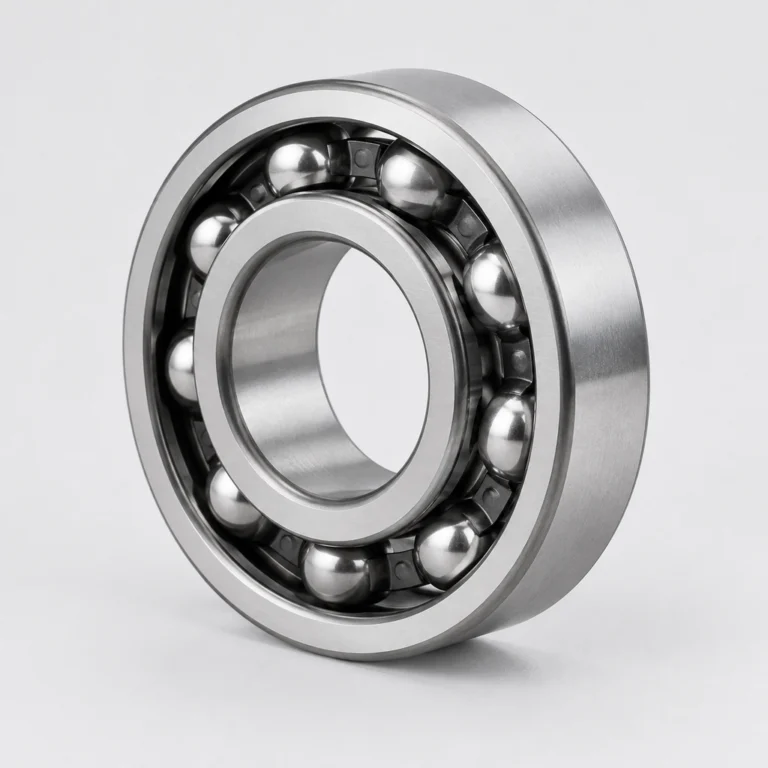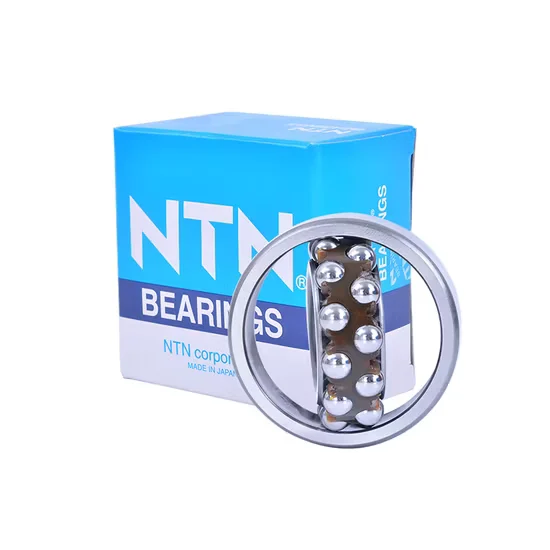
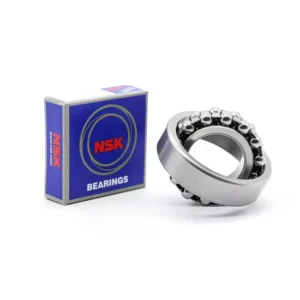
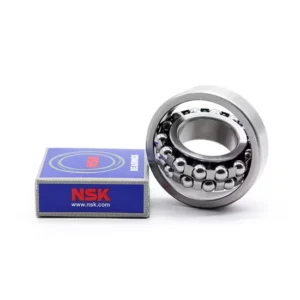
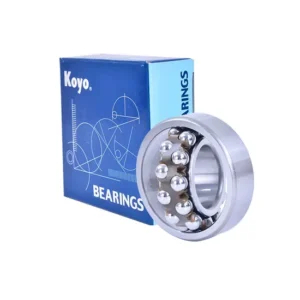
Multi-Brand Sourcing Consolidated — Procure NTN, NSK, and Koyo equivalents for the 1205 self aligning ball bearing in a single mixed-brand shipment without juggling multiple vendors.
Technical Specifications
| Parameter | Value |
|---|---|
| Designation | 1205 |
| Bearing Type | Self Aligning Ball Bearing |
| Bore Diameter (d) | 25 mm |
| Outside Diameter (D) | 52 mm |
| Width (B) | 15 mm |
| Arrangement | Double Row |
| Cage Material | Steel Cage / Brass Cage |
| Clearance Class | C0 / C3 / C4 |
| Precision Class | P0 / P6 / P5 / P4 / P2 |
| Lubrication | Grease or Oil |
| Material | Bearing Steel |
| Origin | China |
Application Suitability
| Industry | Typical Applications |
|---|---|
| Wood-Working Machinery | Spindle supports and feed mechanisms subject to shaft deflection |
| Textile Manufacturing | Yarn guide rollers and tensioning assemblies requiring misalignment tolerance |
| Agricultural Equipment | Harvester conveyor drives exposed to heavy radial loads and dust |
Why Shaft Deflection Destroys Wood-Working Spindles Before the 1205 Self Aligning Ball Bearing Fails
Misalignment causes uneven load distribution across the double-row raceway, accelerating localized fatigue long before the steel reaches its theoretical limits.
In wood-working environments, shaft deflection is inevitable due to heavy cutting forces, uneven timber density, and thermal expansion during continuous operation. When specifying an open-type bearing like this 1205 self aligning ball bearing, overlooking the external sealing requirements is a classic procurement trap that leads to rapid degradation. Early in my career, I shipped a batch of shielded variants instead of contact-sealed ones for a large milling client because the single suffix detail was misread on the purchase order. The fine, abrasive wood dust easily bypassed the non-contact shields, infiltrated the cage pockets, and caused catastrophic jamming and spindle seizure within just a few months [NEED_CITE: rolling bearing failure mode classification per ISO 15243]. Understanding the exact environmental contamination level dictates whether you need an open bearing paired with heavy-duty external housing seals or a completely different factory-sealed alternative to survive the harsh sawmill conditions.
Matching the Double-Row Design to Dynamic Milling Loads
The inner ring features two deep raceway grooves while the outer ring possesses a single continuous spherical raceway, allowing the 1205 self aligning ball bearing to accommodate significant angular misalignment dynamically. This structural flexibility is absolutely crucial for wood-working spindles where severe shaft bending occurs under heavy lateral cutting forces and variable material resistance. Our engineering team meticulously cross-references dimensional tolerances and load ratings across premium global brands to ensure the selected unit handles your specific radial load profile without inducing premature edge loading or localized stress concentrations on the raceway shoulders.
Navigating Dust Ingress and Lubrication Intervals in Sawmills
Wood-working machinery continuously generates fine, highly abrasive particulate matter that easily penetrates standard bearing cavities and acts as a lapping compound. Since the base 1205 designation indicates a completely open design without integrated rubber seals or metal shields, external housing seals are strictly mandatory to prevent fatal contamination. Lubrication selection between grease and oil depends heavily on the spindle speed, operating temperature, and maintenance accessibility; grease provides better particle exclusion but requires strict relubrication schedules to flush out degraded base oil and trapped dust [NEED_CITE: lubrication degradation mechanisms in contaminated environments]. Proper seal contact pressure must carefully balance contamination exclusion against frictional heat generation to maintain optimal thermal stability within the spindle assembly.
Decoding Cage Materials and Internal Clearance Options
Selecting the right cage material directly impacts high-speed stability, vibration damping, and overall operational lifespan. Pressed steel cages offer low mass and reduced centrifugal forces, making them highly suitable for standard wood-working spindle speeds, whereas machined brass cages provide superior durability and thermal conductivity under heavy shock loads and marginal lubrication conditions. Internal clearance selection between C0, C3, and C4 compensates for thermal expansion during continuous, high-intensity milling operations. A tighter clearance might cause dangerous preload binding as the shaft heats up, while excessive clearance increases vibration and noise, ultimately reducing the operational reliability of the precision assembly and accelerating cage wear.
The Hidden Costs of Ignoring Suffix and Clearance Details
Specifying a standard clearance when a C3 is explicitly required for thermal expansion leads to internal preload, causing rapid temperature spikes, lubricant breakdown, and eventual cage failure. Conversely, neglecting to verify the exact cage material against the manufacturer’s official catalog can result in severe resonance failures at critical spindle speeds. These seemingly minor misconfigurations trigger extensive unplanned downtime, void expensive equipment warranties, and cause catastrophic mechanical damage to the surrounding wood-working spindle housings and drive motors [NEED_CITE: economic impact of unplanned downtime in heavy manufacturing]. Accurate cross-referencing and strict attention to suffix details prevent these highly costly operational disruptions and protect your production schedule.
Securing Traceability and Technical Accuracy for Your Order
Sourcing genuine components requires much more than just matching the basic 1205 number; suffix accuracy and internal specification verification are absolutely critical. We verify every single batch against original manufacturer documentation to ensure the cage material, precision class, and clearance perfectly match your exact engineering requirements. Our massive spot inventory covers thousands of standard part numbers, allowing us to consolidate mixed-brand orders efficiently without delaying your maintenance schedule. We provide expert cross-brand equivalent model consultation to prevent dangerous substitution errors, backed by comprehensive failure analysis and long-term application guidance to keep your wood-working machinery running smoothly and profitably.
Documentation & Authenticity
- Original manufacturer batch traceability documents verifying the specific 1205 production run.
- Dimensional inspection reports confirming 25x52x15 mm tolerances before dispatch.
- Material certificates validating the bearing steel grade and heat treatment specifications.
- Certificate of Conformity ensuring compliance with international quality standards.
Storage, Handling & Mounting
- Store the open-type 1205 units in original VCI packaging to prevent corrosion on the exposed double-row raceways.
- Maintain consistent warehouse humidity to protect the unsealed steel cage from moisture ingress.
- Use induction heating for the 25 mm bore installation to avoid mechanical damage to the brass or steel cage.
- Apply the specified grease immediately after unpacking to prevent dry starts in the wood-working spindle.
Engineering Review and Selection Guidance
To finalize the optimal configuration, please share your spindle’s radial and axial load profiles, operational speeds, and ambient temperature ranges. Providing the exact OEM equipment model number allows our technical team to perform precise cross-reference verification and L10 life calculations. Detailing the specific dust concentration in your wood-working facility helps us recommend the most effective external sealing arrangement for this open-type bearing.
Frequently Asked Questions
Q: How do I choose between steel and brass cages for this application?
A: Pressed steel cages are generally preferred for high-speed wood-working spindles due to their lower mass, which reduces centrifugal forces and frictional heat. Machined brass cages are selected when the machinery experiences heavy shock loads, severe vibrations, or operates under marginal lubrication conditions where the superior strength and thermal conductivity of brass are required to prevent cage deformation.
Q: What are the clearance class differences and how should I select them?
A: Standard C0 clearance suits normal operating temperatures and fits. C3 and C4 provide greater internal radial clearance to accommodate thermal expansion of the shaft during continuous high-speed milling or to compensate for tight interference fits on the 25 mm bore. Selecting the correct class prevents internal preload binding and ensures the 1205 self aligning ball bearing operates without excessive heat generation.
Q: How does the self-aligning feature compensate for shaft misalignment?
A: The outer ring features a single spherical raceway while the inner ring has two grooves. This geometry allows the inner ring, balls, and cage assembly to swivel slightly relative to the outer ring. It effectively accommodates static or dynamic angular misalignment caused by shaft deflection under heavy cutting loads, preventing edge loading and premature fatigue on the raceways.
Q: What is the recommended lubrication strategy for wood-working machinery?
A: Since the base designation indicates an open design, external housing seals are mandatory to keep out abrasive wood dust. Grease lubrication is typically recommended as it acts as an additional physical barrier against contamination. Establish a strict relubrication schedule to purge degraded base oil and trapped particulate matter, ensuring the double-row raceway remains properly coated and protected.
Q: How can I verify the authenticity of the purchased bearings?
A: We provide comprehensive original manufacturer batch traceability documentation with every shipment. This includes verifying the specific production run, cross-referencing dimensional inspection reports for the 25x52x15 mm specifications, and supplying material certificates. You can also utilize official brand verification applications to scan QR codes on the packaging, ensuring the components are genuine and fully documented.