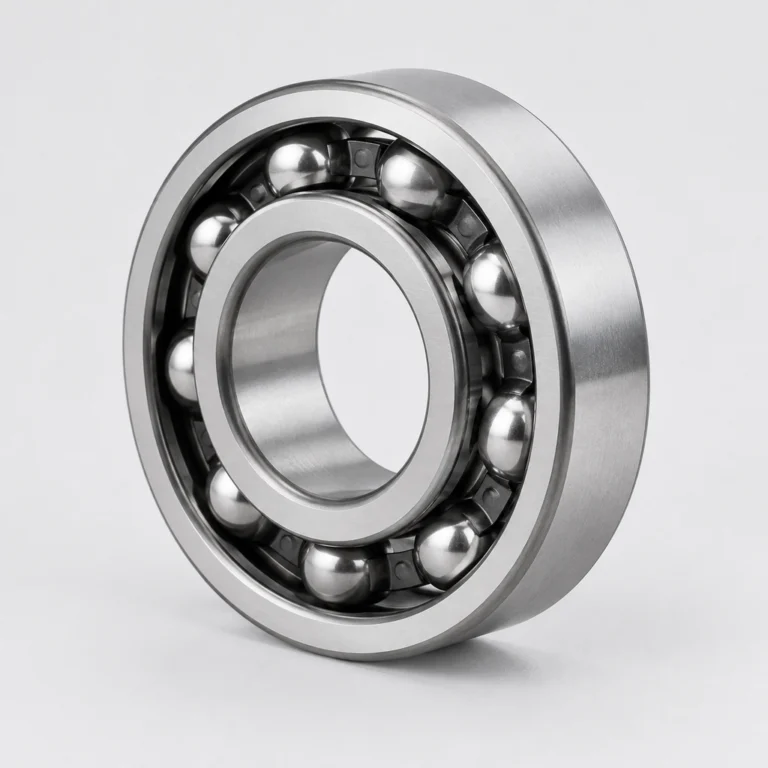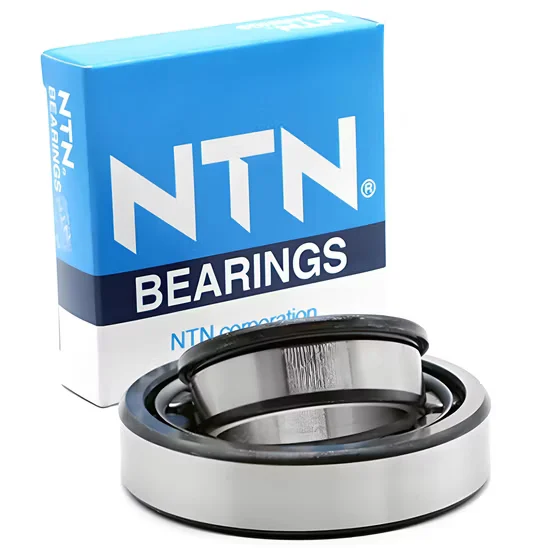
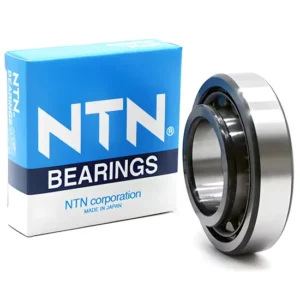
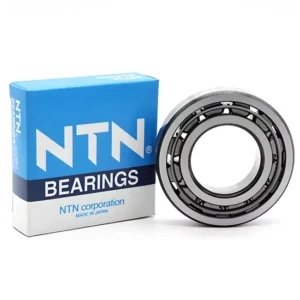
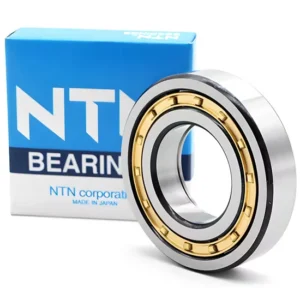
Mixed-Brand Sourcing — Consolidate your NTN and other premium rolling mill bearings into a single shipment without juggling multiple vendors.
Technical Specifications
| Parameter | Value |
|---|---|
| Designation | NJ340EM |
| Bearing Type | Cylindrical Roller Bearing |
| Bore Diameter (d) | 200 mm |
| Outside Diameter (D) | 420 mm |
| Width (B) | 80 mm |
| Cage Material | Machined brass (M suffix) |
| Internal Design | Enhanced capacity (E suffix) |
| Load Direction | Radial |
| Separability | Separated |
| Precision Class | P0, P6, P5, P4, P2 |
| Vibration Level | Z1V1, Z2V2, Z3V3 |
| Material | Bearing Steel |
| Lubrication | Grease or Oil |
| Origin | Japan |
Application Suitability
| Industry | Typical Applications |
|---|---|
| Metallurgy & Steel Mills | Hot rolling mill work rolls, continuous casting machine segments |
| Heavy-Duty Gearboxes | Main drive pinions, industrial reducer shafts |
| Mining & Construction | Crusher eccentric shafts, excavator swing mechanisms |
Why Hot Rolling Mills Destroy a Standard NTN NJ340EM cylindrical roller bearing Before Its Time
Thermal expansion miscalculation is the silent killer of heavy-duty radial supports.
When configuring large-bore cylindrical rollers for hot strip lines, ignoring the operating temperature gradient leads to catastrophic internal clearance loss. I learned this the hard way early in my career at a Shandong steel plant; specifying a standard CN clearance instead of C3 for a similar hot rolling application caused thermal expansion to seize the bearing, burning the roll neck and triggering massive unplanned downtime [NEED_CITE: thermal seizure failure modes in rolling mill bearings]. The intense heat radiating from the processed steel slabs transfers directly into the bearing housing, creating a severe thermal differential between the inner and outer rings. Selecting the correct NTN NJ340EM cylindrical roller bearing requires matching the internal clearance strictly to the thermal profile of the specific mill stand, ensuring the rolling elements maintain adequate operational space even at peak operating temperatures.
Matching the Machined Brass Cage to Mill Stand Vibrations
Heavy equipment like rolling mills and traction motors generate intense vibrational forces that quickly fatigue standard pressed steel cages. The machined brass cage (M suffix) on this NTN NJ340EM cylindrical roller bearing provides superior structural integrity and damping characteristics under these extreme oscillating loads. Unlike lighter alternative materials, the solid brass construction absorbs high-frequency shocks without suffering from micro-cracking or structural deformation. Our supply chain ensures that every unit dispatched for such demanding environments carries the correct cage designation, preventing premature cage fracture and subsequent roller skewing. This structural resilience is absolutely vital for maintaining roller alignment and distributing radial loads evenly across the entire contact surface, ultimately safeguarding the integrity of the entire drive train.
Managing Radial Loads and Thermal Gradients in Steel Plants
The primary challenge in metallurgical applications is sustaining pure radial loads while managing extreme heat transfer from the processed steel. High temperatures drastically reduce lubricant viscosity, demanding oil circulation or specialized high-temperature grease to prevent metal-to-metal contact between the rollers and the raceways. Furthermore, the non-aligning nature of this separated design demands precise housing alignment; any misalignment introduces severe edge loading on the rollers, accelerating surface fatigue. Proper clearance selection, such as opting for C3 or C4, is mandatory to accommodate the differential thermal expansion between the inner ring, outer ring, and rolling elements [NEED_CITE: clearance reduction under thermal gradients in cylindrical roller bearings]. Maintenance teams must also strictly monitor the relubrication intervals, as contaminated grease in a dusty mill environment will rapidly degrade the operational lifespan.
Decoding the E and M Suffixes for Heavy-Duty Reliability
The ‘E’ suffix indicates an optimized internal design with enhanced load-carrying capacity, achieved by maximizing the roller diameter and length within the given envelope dimensions. This geometric refinement directly increases the dynamic load rating, extending the calculated L10 life under heavy radial stresses commonly found in gearbox and crusher applications. Meanwhile, the ‘M’ suffix designates a one-piece machined brass cage, which is essential for high-speed stability and reliable operation when subjected to sudden shock loads or rapid accelerations. Unlike polyamide cages that degrade rapidly at elevated temperatures, the brass construction maintains its mechanical properties well beyond the thermal limits of standard bearing steel. The separable design further simplifies maintenance, allowing the inner ring with the roller and cage assembly to be mounted independently from the outer ring, drastically reducing the time required during scheduled mill shutdowns.
The Financial Toll of Misaligned Clearances and Cage Failures
Deploying a bearing with inadequate internal clearance in a high-heat environment guarantees rapid thermal seizure, leading to catastrophic damage to both the shaft and housing. According to failure analysis frameworks like ISO 15243, cage wear and subsequent roller skewing often stem from selecting pressed steel cages in high-vibration zones [NEED_CITE: ISO 15243 classification for cage wear and roller damage]. Such oversights void warranties and force emergency shutdowns, where the cost of replacing a single roll neck far exceeds the initial procurement savings of a mis-specified component. Furthermore, the secondary damage caused by a seized bearing often requires extensive machining and realignment of the housing, multiplying the total cost of ownership and severely impacting the plant’s overall equipment effectiveness metrics.
Securing Traceable Inventory for Critical Mill Down Times
Sourcing the exact NTN NJ340EM cylindrical roller bearing with the correct E and M suffixes requires more than just checking a catalog; it demands verified inventory. We maintain massive spot stock of these specific heavy-duty configurations, eliminating typical multi-week lead times that halt production lines. Our technical team cross-references your exact operating parameters to confirm the clearance class before dispatch, ensuring you never repeat the CN vs. C3 thermal seizure mistake that plagues inexperienced buyers. Every unit ships with complete factory batch traceability, and our flexible consolidation allows you to mix this Japanese-origin bearing with domestic alternatives for non-critical MRO tasks in a single container. This comprehensive approach guarantees that your critical hot rolling assets receive premium protection while optimizing your overall procurement budget.
Documentation & Authenticity
- Original factory batch traceability linking the NJ340EM to its specific Japanese production run.
- Official brand app QR verification to instantly confirm authenticity upon arrival at your maintenance store.
- Material certificates validating the bearing steel composition and heat treatment protocols.
- Dimensional and running accuracy inspection reports confirming P-class tolerances before global dispatch.
- Certificate of Conformity detailing the exact E and M suffix configurations for your asset management records.
Storage, Handling & Mounting
- Store the separated inner and outer rings in their original anti-corrosion packaging until the exact mounting shift to prevent humidity ingress.
- Use induction heating strictly controlled below the thermal tempering limit when mounting the inner ring onto the roll neck.
- Apply clean lint-free gloves when handling the machined brass cage to avoid acidic sweat corrosion on the precision-machined surfaces.
- Verify the housing bore alignment with a dial indicator before pressing the outer ring to prevent edge loading on the enhanced capacity rollers.
- Ensure the correct C3 or C4 clearance is measured with feeler gauges post-mounting to confirm thermal expansion allowances are intact.
Providing the Right Parameters for Technical Validation
To ensure the selected configuration perfectly matches your rolling mill or gearbox, please provide the exact radial load profiles, operating speed ranges, and steady-state temperature gradients. Sharing the OEM equipment model numbers allows our engineering team to perform precise cross-reference checks against equivalent NU340EM or NJ344EM variants. This data enables us to calculate the required internal clearance and recommend the optimal lubrication strategy for your specific maintenance intervals. By supplying these detailed operational parameters, you enable our specialists to validate the dynamic load ratings and confirm that the enhanced internal geometry will withstand your unique environmental challenges without compromising reliability.
Frequently Asked Questions
Q: How do the E and M suffixes impact the performance of this bearing in a rolling mill?
A: The E suffix denotes an optimized internal geometry that increases the dynamic load rating, which is critical for supporting heavy roll weights. The M suffix specifies a machined brass cage, providing exceptional durability and vibration resistance compared to pressed steel cages, ensuring reliable operation under the intense shock loads typical of hot strip mill applications.
Q: What precautions should I take when cross-referencing this model with equivalent variants?
A: When evaluating cross-references like the NU340EM or NJ344EM, you must verify that the internal clearance, cage material, and precision class align perfectly with your original equipment specifications. Substituting a standard clearance for a C3 variant in high-temperature zones will cause thermal seizure, so always validate the exact suffix configuration with our technical team before finalizing the procurement.
Q: How can I verify the authenticity of the bearing upon delivery?
A: Every genuine unit we supply includes original factory batch traceability documentation and can be authenticated using the official brand app via its unique QR code. We also provide comprehensive dimensional inspection reports and material certificates, ensuring the bearing meets the strict metallurgical and tolerance standards required for heavy-duty industrial applications.
Q: Why is internal clearance selection critical for hot rolling mill applications?
A: In high-temperature environments, the inner ring expands more than the outer ring due to heat transfer from the roll neck. If a standard CN clearance is used instead of C3 or C4, this differential thermal expansion eliminates the internal gap, causing the rollers to bind and seize. Proper clearance selection accommodates this thermal growth, preventing catastrophic bearing failure.