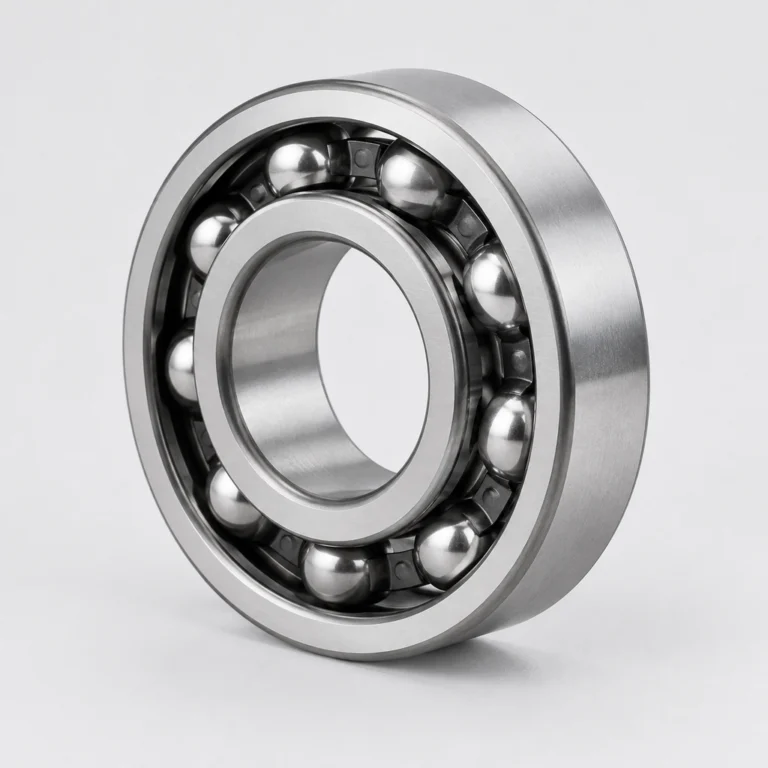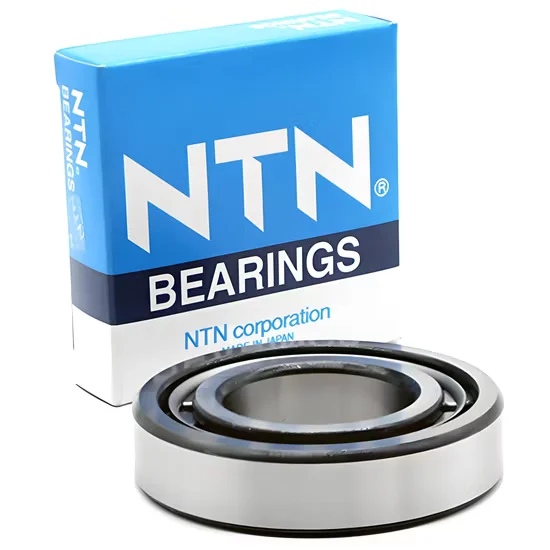
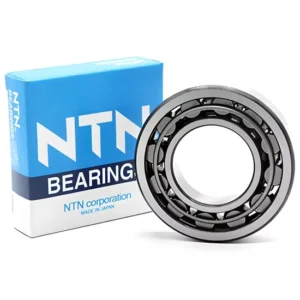

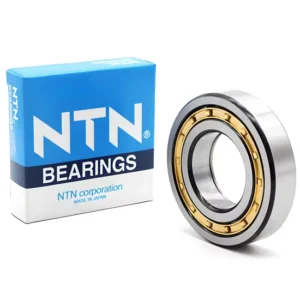
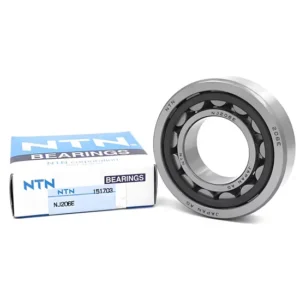

Cross-Reference Alignment Verified — Every NTN NU332EM cylindrical roller bearing shipment includes dimensional and suffix cross-checks against N330EM, NJ330EM, and NU330EM equivalents to prevent misapplication and ensure exact fitment in critical drivetrains.
Technical Specifications
| Parameter | Value |
|---|---|
| Designation | NTN NU332EM |
| Bearing Type | Cylindrical Roller Bearing |
| Bore Diameter (d) | 160 mm |
| Outside Diameter (D) | 340 mm |
| Width (B) | 68 mm |
| Number of Rows | Single |
| Cage Material | Machined Brass |
| Material | Bearing Steel |
| Lubrication | Grease or Oil |
| Separated | Separated |
| Origin | Japan |
Application Suitability
| Industry | Typical Applications |
|---|---|
| Heavy-duty gearboxes | Main drive pinion shafts |
| Rolling mills | Work roll and backup roll necks |
| Traction motors | Rotor shaft support assemblies |
Why Brass Cages Prevent Catastrophic Seizures in the NTN NU332EM cylindrical roller bearing
Machined brass retainers absorb severe shock loads that would instantly shatter stamped steel alternatives.
Witnessing a mining vibrating screen seize due to a shattered stamped steel cage in an NU330EM during early failure analysis fieldwork shifted my focus entirely to heavy-duty cylindrical roller selection. That single incident highlighted how quickly inadequate cage materials compromise entire production lines under dynamic stress. Now, when specifying this bearing for demanding industrial gearboxes, verifying the machined brass cage and internal clearance remains non-negotiable to prevent site downtime and protect adjacent mechanical components from catastrophic secondary damage [NEED_CITE: rolling bearing failure mode classification per ISO 15243]. Procurement engineers must look beyond basic dimensional matching and scrutinize the internal architecture to guarantee operational reliability.
Matching Radial Capacity to Extreme Mill Environments
Heavy-duty gearboxes, traction motors, and rolling mills demand exceptional radial load support without compromising rotational stability or generating excessive friction. The NTN NU332EM cylindrical roller bearing delivers this through an optimized internal geometry that distributes stress evenly across the entire roller profile and raceway contact area. Our global sourcing network ensures these specific high-capacity units are consolidated with other critical drivetrain components for unified project shipments, eliminating the logistical friction of coordinating multiple suppliers. By securing genuine inventory directly from authorized channels, we provide the exact metallurgical consistency required for continuous operation in harsh metallurgical and mining environments where equipment availability dictates overall plant profitability.
Managing Heavy Radial Loads and Thermal Expansion
Industrial gearboxes and rolling mill stands generate substantial heat during continuous operation, causing inner ring expansion that can completely eliminate internal clearance if not properly specified during the initial selection phase. Cylindrical roller bearings rely on precise radial clearance to accommodate these thermal shifts while maintaining strict roller alignment under extreme radial forces and momentary shock loads. Inadequate lubrication or incorrect clearance selection inevitably leads to excessive friction, localized overheating, and premature raceway spalling that destroys the bearing within weeks of installation [NEED_CITE: thermal expansion effects on bearing clearance and lubrication]. Understanding the specific thermal profile of the application housing is therefore just as critical as calculating the static and dynamic load ratings to ensure long-term operational stability.
Decoding the E and M Suffixes for Load and Speed
The suffix designations dictate the absolute operational boundaries and failure thresholds of this component in heavy machinery. The ‘E’ indicates an enhanced internal design with a noticeably higher dynamic load rating, achieved through optimized roller end geometry, modified contact profiles, and an increased roller count within the same boundary dimensions. The ‘M’ confirms a machined brass cage, which provides superior structural strength, better heat dissipation, and exceptional vibration damping at high speeds compared to pressed steel or polyamide alternatives. Selecting the correct suffix combination ensures the bearing withstands the specific shock loads, thermal cycles, and lubrication starvation risks inherent to the application. Ignoring these suffix distinctions often results in deploying a standard capacity unit into an enhanced capacity requirement, accelerating fatigue failure [NEED_CITE: dynamic load rating calculations per ISO 281].
The Hidden Toll of Cage and Clearance Mismatches
Substituting a brass-caged unit with a stamped steel variant in high-vibration environments inevitably leads to rapid cage fatigue, pocket wear, and catastrophic roller skewing under load. Such failures trigger severe unplanned downtime and cause extensive secondary damage to adjacent gearbox shafts, seals, and expensive cast housings. Adhering to established failure analysis frameworks prevents these costly cascade effects by ensuring the cage material and internal clearance perfectly match the dynamic load profile and thermal environment [NEED_CITE: cage failure mechanisms and secondary damage in heavy machinery]. The true cost of a mismatched bearing is never just the replacement part; it encompasses the lost production hours, emergency freight expenses, and the labor required to dismantle and rebuild the entire drivetrain assembly.
Securing Traceable Inventory for Critical Drivetrains
Sourcing heavy-duty bearings requires strict verification protocols to avoid counterfeit, relabeled, or mislabeled stock that compromises equipment safety. We provide complete traceability documentation for every unit, ensuring the ‘M’ suffix genuinely represents a machined brass cage rather than a cheaper, inadequately machined substitute. Our flexible consolidation services allow mixed-brand and mixed-size orders to be shipped together in single containers, while our technical team cross-checks dimensional equivalents to prevent installation errors on the shop floor. Massive spot inventory covers thousands of standard and special part numbers to meet urgent maintenance requirements, supported by long-term after-sales technical guidance for failure analysis and continuous application optimization.
Documentation & Authenticity
- Certificate of Conformity verifying the exact NTN NU332EM designation and Japanese origin.
- Original batch traceability codes linking the machined brass cage to the manufacturer’s production facilities.
- Dimensional inspection reports confirming the 160x340x68 mm boundaries and precision tolerances.
- Material test certificates validating the bearing steel composition and enhanced capacity roller profiles.
Storage, Handling & Mounting
- Keep the separated inner and outer rings in original packaging until mounting to prevent corrosion on the 160 mm bore.
- Use induction heating for the inner ring installation, monitoring temperature to preserve the bearing steel hardness.
- Inspect the machined brass cage for any transit damage before assembling the roller set into the outer ring.
- Apply the specified grease or oil lubrication immediately after mounting to protect the enhanced capacity roller ends.
Engineering Data Required for Selection Verification
Share your exact radial loads, operational speeds, housing thermal conditions, and installation space constraints so our engineering team can verify the L10 life calculation and recommend the optimal internal clearance. Providing the original equipment manufacturer part number allows us to cross-reference the required specifications and confirm the machined brass cage is the definitive choice for your specific operating environment.
Frequently Asked Questions
Q: How do I verify the authenticity of the machined brass cage on this bearing?
A: Authenticity is confirmed through original batch traceability codes and physical inspection of the cage pocket machining quality. We provide manufacturer documentation that explicitly validates the suffix, ensuring the cage material meets the required strength specifications for heavy-duty applications rather than being a substituted pressed steel variant that risks premature failure.
Q: What are the cross-reference precautions when substituting this model?
A: When cross-referencing to equivalent models, you must verify that the internal clearance and cage material match exactly. Substituting a brass-caged unit with a polymer or stamped steel alternative in high-vibration gearboxes will alter the speed limits and shock load capacity, potentially leading to premature cage failure and unplanned equipment downtime across the entire production line.
Q: What is the difference between standard and enhanced capacity designs?
A: The enhanced capacity design features an optimized internal geometry with a higher roller count and modified roller end profiles. This configuration significantly increases the dynamic radial load rating compared to standard designs, making it essential for applications like rolling mills and heavy-duty gearboxes where extreme radial forces and continuous shock loads are constantly present during operation.
Q: How should I handle the separated rings during installation?
A: The separable design allows the inner ring and roller assembly to be mounted independently from the outer ring. Keep both components sealed until the exact moment of installation to prevent contamination. Use induction heating for the inner ring to ensure a proper interference fit on the shaft without damaging the machined brass cage or the enhanced rollers.
Q: What lubrication practices are recommended for this large-bore bearing?
A: Large-bore cylindrical roller bearings require precise grease or oil lubrication to manage friction at the roller ends and cage pockets. Ensure the lubricant is compatible with the operating temperature and applied in the correct quantity to prevent churning losses. Regular relubrication intervals must be established based on the specific vibration and thermal conditions of the gearbox housing.