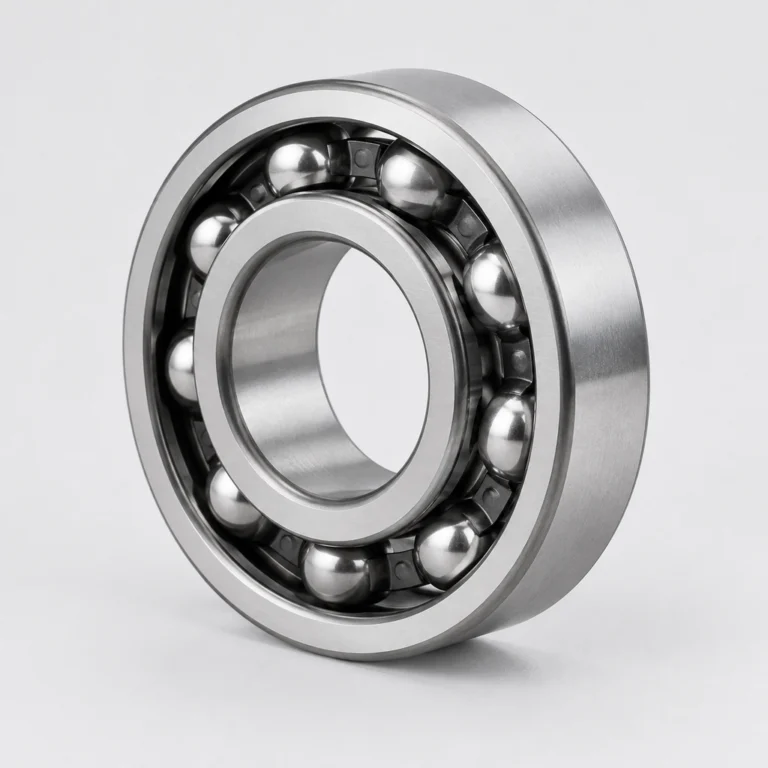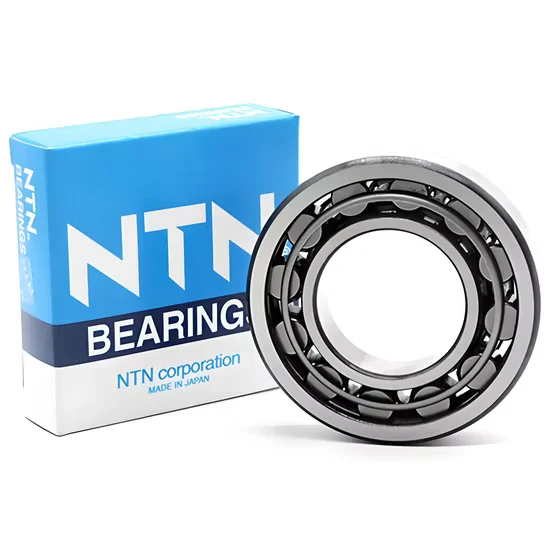
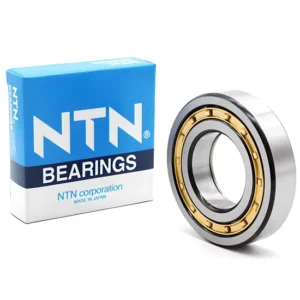
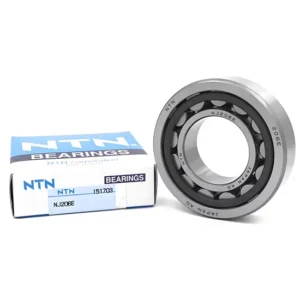
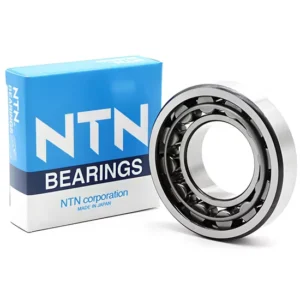
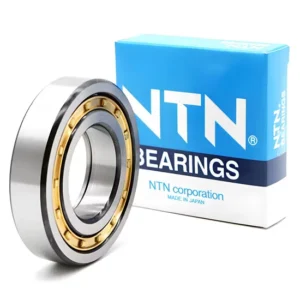
Authenticity via QR scan — Every NTN N320em cylindrical roller bearing we dispatch retains its original factory packaging with a scannable verification code to guarantee traceability.
Technical Specifications
| Parameter | Value |
|---|---|
| Designation | N320em |
| Bearing Type | Cylindrical Roller Bearing |
| Bore Diameter (d) | 100 mm |
| Outside Diameter (D) | 215 mm |
| Width (B) | 47 mm |
| Material | Bearing Steel |
| Lubrication | Grease or Oil |
| Load Direction | Radial Bearing |
| Separated | Separated |
| Structure | Cylindrical |
| Origin | Japan |
Application Suitability
| Industry | Typical Applications |
|---|---|
| Heavy-Duty Gearboxes | Main drive shafts and reduction gear stages |
| Traction Motors | Rotor shaft support in electric locomotives |
| Rolling Mills | Work roll and backup roll neck support |
Why Suffix Guesswork Destroys Heavy-Duty Gearboxes
Assuming a cage material without verifying the exact suffix leads to catastrophic downtime.
Early in my career, I shipped a batch of cylindrical roller bearings to a copper mine in Chile for their primary crushers. The purchase order simply stated the base model, and I overlooked the cage suffix, sending stamped steel instead of machined brass. Under extreme vibration, the cages fractured prematurely, halting the entire processing line. That disaster reshaped my approach. Today, when sourcing a NTN N320em cylindrical roller bearing, I obsess over every suffix and clearance code because a minor catalog discrepancy translates directly into massive financial losses [NEED_CITE: rolling bearing failure mode classification per ISO 15243].
Matching the Bearing to Extreme Radial Loads
Mining conveyors and steel mill rolling stands demand components that withstand relentless radial forces without deflection. The NTN N320em cylindrical roller bearing addresses this by utilizing a heavy-duty cage design optimized for high-capacity radial support. Our global sourcing network ensures that whether you need a single emergency replacement or a consolidated shipment for a plant overhaul, the exact specification reaches your site without compromise.
Navigating Vibration, Heat, and Contamination
In traction motors and rolling mills, the operating environment is brutally unforgiving. Heavy radial loads combine with intense structural vibrations that can fatigue inferior cage materials rapidly. Elevated operating temperatures dictate precise internal clearance selections to prevent binding when the inner ring expands against the shaft. Furthermore, airborne particulate matter in mining sites necessitates reliable external sealing solutions, as the open bearing design relies entirely on the housing’s sealing efficiency to maintain lubrication integrity and prevent abrasive wear [NEED_CITE: impact of contamination on bearing fatigue life].
Decoding the Separable Architecture
The "N" designation indicates that the inner ring features two integral ribs while the outer ring is completely ribless. This separable structure allows the inner ring with the roller and cage assembly to be mounted independently from the outer ring, drastically simplifying installation in tight gearbox housings. Available in bearing steel or other specialized variants, the material provides a substantial cross-section for load distribution. Because the components are interchangeable, maintenance crews can inspect the raceways without dismantling the entire shaft arrangement. Grease or oil lubrication compatibility offers flexibility depending on the specific thermal management strategy of the machinery.
The Hidden Financial Drain of Improper Selection
Selecting an incorrect internal clearance or mismatching the cage material for high-vibration environments triggers a cascade of mechanical failures. Micro-pitting initiates on the raceways, escalating into spalling and eventual seizure of the shaft. This unplanned downtime not only halts production but also causes catastrophic damage to adjacent gears and housings. Adhering to proper selection protocols outlined in ISO 281 ensures the calculated fatigue life aligns with the actual operational demands, preventing premature replacements and voided equipment warranties [NEED_CITE: bearing life calculation methods per ISO 281].
Securing Exact Specifications Through Rigorous Verification
Sourcing authentic components requires more than just matching a part number on a screen. When dealing with complex cylindrical roller bearings, misinterpreting a suffix can result in receiving a pressed steel cage instead of the required machined brass variant. We cross-reference every order against official manufacturer catalogs to validate cage materials and clearance classes before dispatch. Our inventory covers thousands of standard and special part numbers, allowing us to consolidate mixed-brand shipments efficiently. Furthermore, our technical team provides post-installation failure analysis to ensure long-term reliability in your specific application.
Documentation & Authenticity
- Original batch traceability documents linking the specific bearing to its manufacturing date.
- Material inspection reports verifying the metallurgical composition of the bearing steel rings.
- Dimensional and running accuracy inspection reports confirming the 100 mm bore tolerance compliance before shipment.
- Certificate of Conformity issued by the authorized channel to guarantee genuine origin.
Storage, Handling & Mounting
- Keep the separable inner ring and roller assembly in its original wrapping until mounting to prevent corrosion.
- Use induction heating for the 100 mm bore inner ring to ensure proper interference fit without damaging the cage.
- Store the bearing in a climate-controlled environment to protect the bearing steel or alternative material options from humidity.
- Apply clean gloves during handling to avoid transferring acidic moisture onto the precision-ground raceways of this 215 mm OD component.
- Ensure the housing seals are fully functional before installation, as the open design relies on external contamination barriers.
Preparing Your Technical Inquiry
To ensure precise model selection and L10 life verification, please share your specific operating parameters, including exact radial loads, rotational speeds, and ambient temperatures. Providing the OEM equipment nameplate data allows our engineering team to perform accurate cross-reference checks and confirm the optimal internal clearance. This technical review guarantees the component matches your machinery’s exact mechanical and thermal requirements.
Frequently Asked Questions
Q: How do cross-reference differences affect the selection between N320, NJ320, NU320, and NUP320?
A: The prefix dictates the rib configuration and axial load capacity. The N type has a ribless outer ring and only supports radial loads, while NJ, NU, and NUP variants feature different rib placements on the inner and outer rings to accommodate varying degrees of axial displacement or locating bearing functions. Selecting the wrong prefix will result in immediate axial failure or shaft binding.
Q: What does the unverified suffix mean and how should it be handled during procurement?
A: An unverified suffix indicates that the specific code requires direct manufacturer catalog confirmation, as it may denote a specialized cage material, non-standard clearance, or a custom internal design. Procuring such a bearing without verifying the exact suffix definition risks receiving a standard variant that cannot withstand the specific vibration or thermal demands of your application.
Q: How to select the correct lubrication for cylindrical roller bearings in heavy gearboxes?
A: The choice between grease and oil depends on the operating speed and thermal dissipation requirements. Oil lubrication is typically preferred for high-speed traction motors to carry away heat, while heavy-duty gearboxes often utilize grease for its superior sealing properties and simplified maintenance intervals. The final decision must align with the specific cage material and operating temperature range.
Q: What are the mounting procedures for separable cylindrical roller bearings?
A: The separable design allows the inner ring with the roller assembly to be mounted onto the shaft independently from the outer ring, which is pressed into the housing. This simplifies installation in confined spaces. The inner ring should be heated using an induction heater to achieve the necessary expansion for a tight interference fit without applying excessive mechanical force to the rollers.
Q: How to verify the authenticity of bearings through official channels?
A: Authenticity is verified by examining the original packaging for intact factory seals and scanning the provided QR code using the manufacturer’s official application. Additionally, requesting the original batch traceability documentation and cross-referencing the physical marking on the bearing rings against the official catalog specifications ensures the component is a genuine product and not a counterfeit substitute.