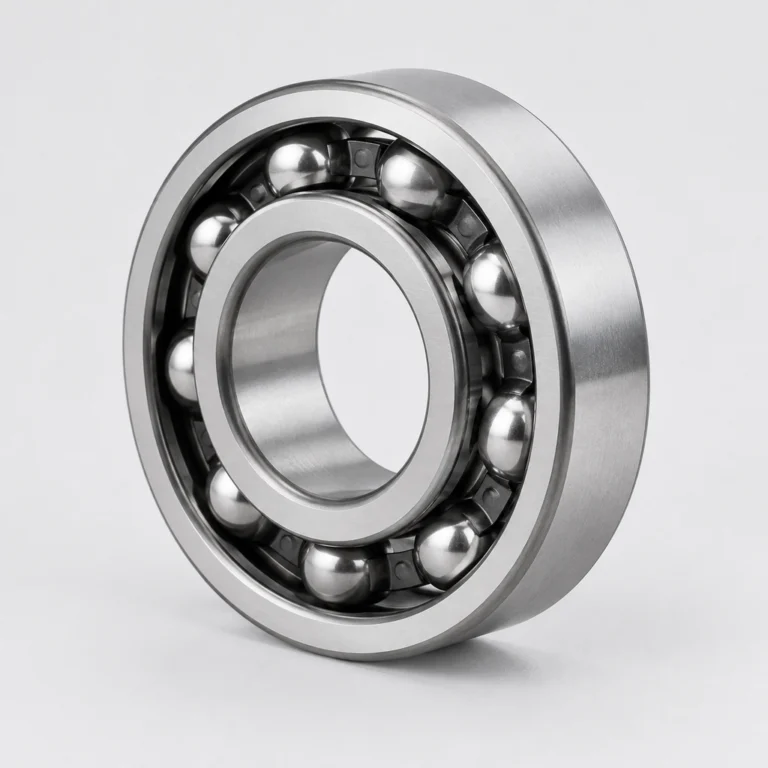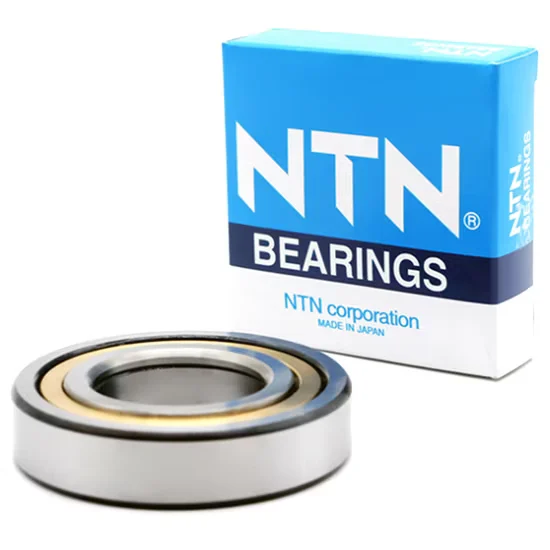
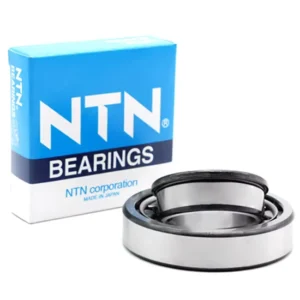
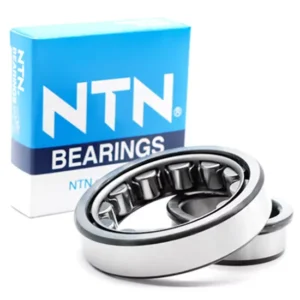
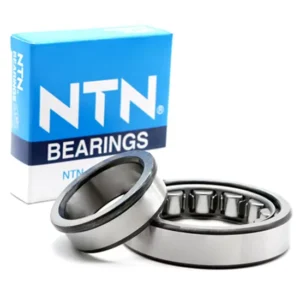
Traceable Japan Origin — Every NTN N318E cylindrical roller bearing we dispatch includes factory batch documentation linking directly to the Aichi production facility.
Technical Specifications
| Parameter | Value |
|---|---|
| Designation | NTN N318E |
| Bearing Type | Cylindrical Roller Bearing |
| Bore Diameter (d) | 90 mm |
| Outside Diameter (D) | 190 mm |
| Width (B) | 43 mm |
| Material | Bearing Steel |
| Number of Rows | Single Row |
| Seal or Shield Type | Open |
| Precision Class | P0, P6, P5, P4, P2 |
| Lubrication | Oil, Grease, Dry |
| Separated | Separated |
| Origin | Japan |
Application Suitability
| Industry | Typical Applications |
|---|---|
| Heavy Machinery | Heavy-duty gearboxes main shaft support |
| Metal Processing | Rolling mill work roll and backup roll necks |
| Rail Transit | Traction motor suspension and drive axles |
Thermal Expansion Risks for the NTN N318E cylindrical roller bearing in Heavy Gearboxes
Heat generation under continuous radial load demands adequate internal clearance to prevent catastrophic roller skewing and cage failure.
Years ago, shipping a standard clearance cylindrical roller bearing with a pressed steel cage to a mining crusher resulted in severe thermal expansion. The internal clearance vanished under high vibration and elevated temperatures, causing the rollers to skew, the cage to fracture, and the shaft to lock up completely [NEED_CITE: rolling bearing failure mode classification per ISO 15243]. Now, specifying a C3 clearance and a machined brass cage is non-negotiable for these extreme environments, preventing the catastrophic chain reaction of secondary component damage.
Matching the NTN N318E cylindrical roller bearing to Extreme Radial Loads
The enhanced capacity design integrated into this NTN N318E cylindrical roller bearing allows it to sustain massive radial forces typical in rolling mills and traction motors. Our engineering team provides cross-brand equivalent model consultation to ensure this specific dimension series aligns perfectly with your existing housing tolerances. By verifying the exact load profile, we prevent the common mistake of undersizing the roller complement.
Managing Vibration and Thermal Gradients in Mill Drives
Continuous shock loads combined with high rotational speeds generate significant friction heat within the gearbox housing. An open seal configuration is mandatory here, allowing aggressive oil circulation to flush out metallic debris and dissipate thermal energy effectively. When operating beyond the thermal limit of standard bearing steel, selecting the appropriate C3 or C4 clearance compensates for the differential expansion between the steel shaft and the cast iron housing [NEED_CITE: thermal expansion effects on internal clearance per ISO 281]. Proper induction heating during installation ensures the inner ring expands uniformly without damaging the roller pathways, while careful alignment prevents edge loading on the rollers.
Decoding the Enhanced Capacity and Separated Architecture
The "E" suffix denotes an optimized internal geometry that increases the roller diameter and length, substantially boosting the dynamic load rating compared to standard designs. As an N-type configuration, the outer ring lacks flanges, meaning it can only accommodate pure radial loads and requires external axial locating components. The separated structure simplifies maintenance, allowing the inner ring with the roller and cage assembly to be mounted independently from the outer ring. Precision classes ranging from P0 to P2 dictate the running accuracy; while P0 suffices for general gearboxes, rolling mill applications often demand P6 or P4 to minimize vibration at high speeds. The open design facilitates flexible lubrication strategies, enabling facilities to use their centralized oil mist or circulating oil systems to maintain a stable hydrodynamic film.
The Financial Impact of Ignoring Cage and Clearance Specifications
Deploying a pressed steel cage in a high-vibration traction motor leads to accelerated fatigue cracking and eventual cage disintegration. When internal clearance is insufficient, thermal growth forces the rollers against the raceways, triggering smearing, severe friction, and unplanned downtime that halts the entire production line. Such premature failures not only void warranty claims but also cause catastrophic damage to adjacent gears and shafts. Calculating the L10 life accurately requires factoring in these specific operational penalties rather than relying on catalog ratings alone [NEED_CITE: dynamic load rating adjustments per ISO 281].
Securing Authentic Components for Critical Drivetrains
Sourcing genuine Japanese-manufactured components eliminates the risk of receiving counterfeit rings with substandard metallurgical hardness. We maintain massive spot inventory covering thousands of standard part numbers, ensuring urgent maintenance requirements for rolling mills are met without typical multi-week lead times. Our technical selection support helps buyers avoid the trap of substituting a constrained flange design when the standard N-type is strictly required for axial float. Every shipment includes complete traceability documentation, and our flexible MOQ accommodates both single-unit emergency spare-part orders and full container consolidation. Furthermore, our global shipping consolidation service ensures these heavy units arrive safely at your facility, backed by long-term after-sales technical support for failure analysis.
Documentation & Authenticity
- Certificate of Conformity verifying the Japanese origin and specific batch number of the N318E series.
- Official app QR verification linking the physical box label to the manufacturer’s production database.
- Material inspection report confirming the bearing steel meets required hardness and metallurgical purity.
- Dimensional and running accuracy inspection validating the selected P-class tolerances before dispatch.
- Factory batch traceability documents ensuring full accountability from the Aichi forging facility to your dock.
Storage, Handling & Mounting
- Keep the open bearing in its original VCI packaging until mounting to prevent moisture ingress on the unprotected raceways.
- Use induction heating for the 90 mm bore inner ring, monitoring temperature to preserve the C3 clearance geometry.
- Handle the separated outer ring with clean gloves to avoid transferring corrosive salts to the precision-ground surface.
- Apply the specified circulating oil immediately after mounting, as the open design lacks factory-applied preservative grease.
- Support the heavy single-row assembly properly during hoisting to prevent brinelling on the enhanced capacity rollers.
Engineering Data Required for Technical Validation
To perform a precise L10 life calculation and verify the optimal clearance class, please share your exact radial load profiles, operating speeds, and steady-state thermal conditions. Providing the OEM equipment model number allows our engineering team to execute a thorough cross-reference check against legacy installations. Specify your housing material and shaft tolerances so we can confirm the necessary fit adjustments for the separated inner and outer rings.
Frequently Asked Questions
Q: What does the "E" suffix indicate on this specific cylindrical roller bearing?
A: The "E" suffix designates an enhanced capacity internal geometry. This optimized profile increases the roller diameter and length, substantially boosting the dynamic load rating. It is engineered specifically to handle the extreme radial forces encountered in heavy-duty gearboxes and rolling mills without compromising the operational speed limits.
Q: Why is the N-type outer ring design critical for specific gearbox applications?
A: The N-type configuration features flanges on the inner ring but lacks them on the outer ring. This specific architecture allows the bearing to accommodate pure radial loads while permitting slight axial displacement of the shaft relative to the housing, which is essential for managing thermal expansion in heavy-duty gearboxes.
Q: How can I verify the authenticity of the received components?
A: You can authenticate the components by scanning the QR code on the packaging using the manufacturer’s official mobile application. This digital verification links the physical product directly to the factory’s production database, confirming the Japanese origin, batch number, and precise manufacturing date to eliminate counterfeit risks.
Q: Which precision class is appropriate for high-speed traction motor applications?
A: While P0 is standard for general industrial gearboxes, traction motors operating at elevated speeds typically require P6 or P4 precision. Higher precision classes minimize running noise and vibration by ensuring tighter tolerances on the bore, outside diameter, and radial runout, which is critical for passenger comfort and motor longevity.
Q: What are the best practices for mounting this separated design?
A: For the separated design, mount the inner ring with the roller and cage assembly onto the shaft using induction heating, ensuring uniform expansion. The outer ring can be pressed into the housing separately. This independent installation prevents damage to the rolling elements and simplifies alignment in heavy machinery applications.