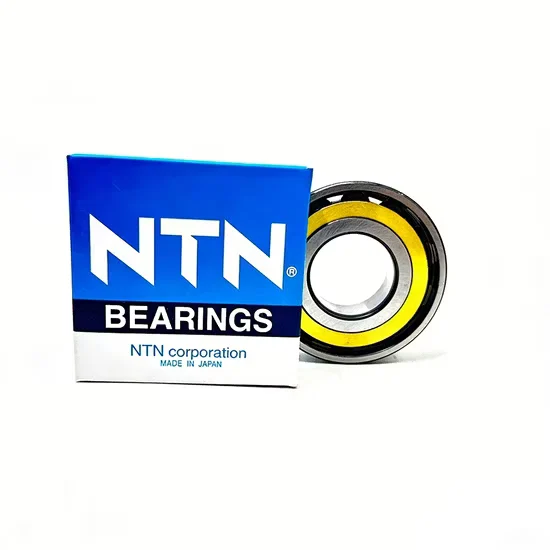
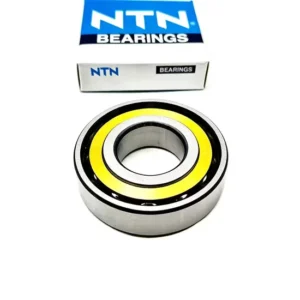
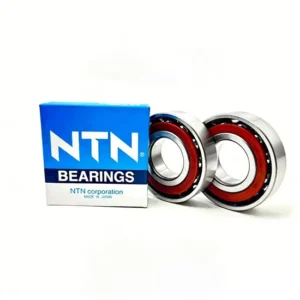
Full Brand Sourcing — Consolidate your NTN 7220 angular contact ball bearing orders with other premium makes in a single shipment to simplify multi-vendor logistics.
Technical Specifications
| Parameter | Value |
|---|---|
| Designation | NTN 7220 |
| Bearing Type | Angular Contact Ball Bearing |
| Bore Diameter (d) | 100 mm |
| Outside Diameter (D) | 180 mm |
| Width (B) | 34 mm |
| Seal or Shield Type | Open |
| Number of Rows | Single |
| Material | Available in standard bearing steel variants |
| Lubrication | Grease or Oil |
Application Suitability
| Industry | Typical Applications |
|---|---|
| Precision Machinery | Main drive spindles and high-rigidity rotary tables |
| Machine Tool Manufacturing | Heavy-duty milling head spindle supports |
| Fluid Handling | High-speed pump shaft load support |
Why Standard Clearance Fails in Precision Spindles Using the NTN 7220 angular contact ball bearing
Thermal expansion in high-speed machining rapidly eliminates normal internal clearance, leading to catastrophic seizure.
Early in my career dispatching bearings to a Nigerian machine tool plant, I shipped standard clearance units for a high-temperature spindle application. The lack of suffix verification meant the normal clearance couldn’t accommodate the thermal growth, causing the spindle to lock up within hours, destroying the expensive housing [NEED_CITE: thermal seizure mechanisms in angular contact bearings]. Procurement engineers must recognize that baseline designs require rigorous matching to the actual thermal profile of the machinery, rather than assuming a standard part number fits all scenarios.
Matching Baseline Rigidity to Demanding Rotary Axes
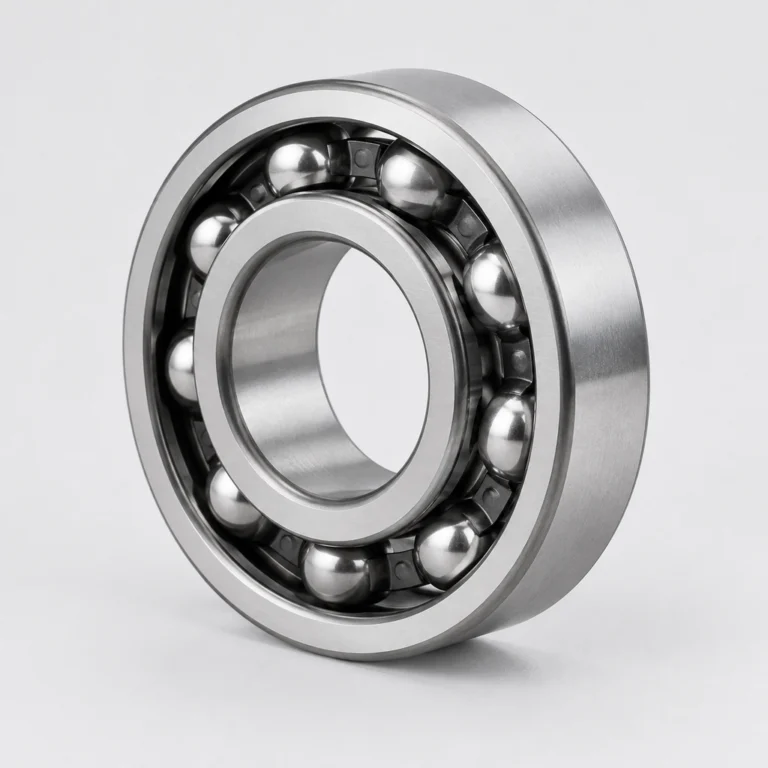
The NTN 7220 angular contact ball bearing provides a reliable foundation for heavy-duty rotary applications where combined radial and axial loads are prevalent. Its single-row open architecture allows maintenance teams to implement custom oil-air or oil-jet lubrication circuits directly into the spindle housing, maximizing heat dissipation. By securing genuine units from authorized global channels, facilities ensure the baseline metallurgical integrity required for continuous precision machining and avoid the hidden risks of compromised material structures.
Managing Thermal Growth and Axial Thrust in Spindles
Machine tool spindles generate substantial axial thrust during heavy cutting operations, demanding reliable load-carrying capacity from the support bearings to maintain tool positioning. As rotational speeds increase, friction and cutting heat cause* different rates than the outer housing. If the internal clearance is not pre-calculated for this thermal gradient, the rolling elements will skid, overheat, and degrade the raceway surfaces [NEED_CITE: spindle thermal displacement effects on bearing preload]. Selecting the appropriate clearance class and precision grade is therefore non-negotiable for maintaining dimensional accuracy in the finished workpiece and preventing catastrophic spindle failure.
Decoding the Unmarked Suffix and Baseline Tolerances
An identifier without extra suffixes denotes a standard design with normal clearance and normal precision, which serves as a reliable baseline for many industrial applications. While this configuration suits general industrial gearboxes or moderate-speed pumps, precision spindles typically demand upgraded tolerances and specific contact angles to handle extreme rigidity requirements. The open seal type facilitates optimal heat dissipation and allows for precise external lubrication, avoiding the friction penalties and speed limitations of integrated contact seals. Procurement teams should cross-reference the exact spindle requirements against the manufacturer’s catalog to determine if a high-precision or adjusted-clearance variant is necessary for their specific machinery.
The Financial Impact of Overlooking Suffix Details
Specifying a standard clearance bearing for a high-speed, high-temperature spindle inevitably results in unplanned downtime, scrapped production batches, and severe equipment damage. When thermal expansion consumes the internal clearance, the resulting preload spike accelerates fatigue and can destroy the spindle housing beyond repair [NEED_CITE: rolling bearing failure mode classification per ISO 15243]. The financial impact of replacing a damaged machine tool spindle vastly outweighs the initial investment in correctly specified, high-precision angular contact bearings, making thorough application analysis a critical step in the procurement process.
Securing Traceable Spindle Components Across Global Networks
Sourcing genuine spindle bearings requires strict supply chain verification to avoid counterfeit units that compromise machine accuracy and operational safety. We maintain massive spot inventory covering thousands of standard and special part numbers, ensuring urgent maintenance requirements are met without extended lead times. Our technical team provides cross-brand equivalent model consultation, helping you verify if a baseline unit can be safely substituted during emergency breakdowns without sacrificing performance. Every shipment includes complete traceability documentation, guaranteeing the metallurgical authenticity required for critical precision machinery and giving maintenance managers absolute confidence in their replacement parts.
Documentation & Authenticity
- Certificate of Conformity verifying the original manufacturing batch for this specific open-type unit.
- Official app QR verification to confirm the anti-counterfeit status of the 100mm bore bearing.
- Dimensional inspection reports confirming the 180mm outside diameter and 34mm width tolerances.
- Material certification validating the bearing steel composition for high-rigidity applications.
Storage, Handling & Mounting
- Retain the original VCI packaging until installation to prevent surface corrosion on the open bearing surfaces.
- Use induction heating for the 100mm bore inner ring to ensure uniform thermal expansion without damaging the raceway.
- Maintain strict cleanroom protocols during mounting, as the open seal type offers no built-in contamination defense.
- Apply the specified spindle oil immediately after unpacking to protect the unlubricated bearing steel components.
Engineering Review for Spindle Integration
To ensure optimal spindle performance, please provide the specific radial and axial load profiles, maximum operating speeds, and expected thermal gradients of your application. Sharing the original OEM equipment number allows our engineering team to perform a precise cross-reference check and recommend the correct clearance and precision upgrades. This technical review guarantees the selected NTN 7220 angular contact ball bearing configuration aligns perfectly with your machine tool’s operational demands.
Frequently Asked Questions
Q: How can I verify the authenticity of the received units?
A: You can authenticate the units by scanning the QR codes on the packaging using the manufacturer’s official mobile application. Additionally, we provide a Certificate of Conformity and original batch traceability documents that link the specific bearing to its production facility, ensuring complete supply chain transparency for your quality assurance records.
Q: What cross-reference equivalents exist for this baseline model?
A: While this specific identifier represents a standard baseline design, equivalent models from other premium global brands are often available for cross-referencing. Our technical team can evaluate your exact load, speed, and precision requirements to identify suitable alternatives from our extensive inventory, ensuring your maintenance schedule remains uninterrupted during supply chain fluctuations.
Q: How do I select the right lubrication for this open design?
A: Since the open seal type lacks internal grease, you must implement an external lubrication system such as oil-air or oil-jet circulation. The choice between grease and oil depends on your spindle’s speed factor and cooling requirements, with high-speed machining typically demanding continuous oil flow to manage friction heat and maintain dimensional stability.
Q: Why did my standard clearance bearing seize in a hot spindle?
A: Standard clearance is designed for moderate temperature environments. In high-speed spindles, thermal expansion of the shaft and inner ring reduces the internal clearance, eventually causing the rolling elements to bind and seize. For elevated temperature applications, you must specify a bearing with increased internal clearance to compensate for the thermal growth during operation.