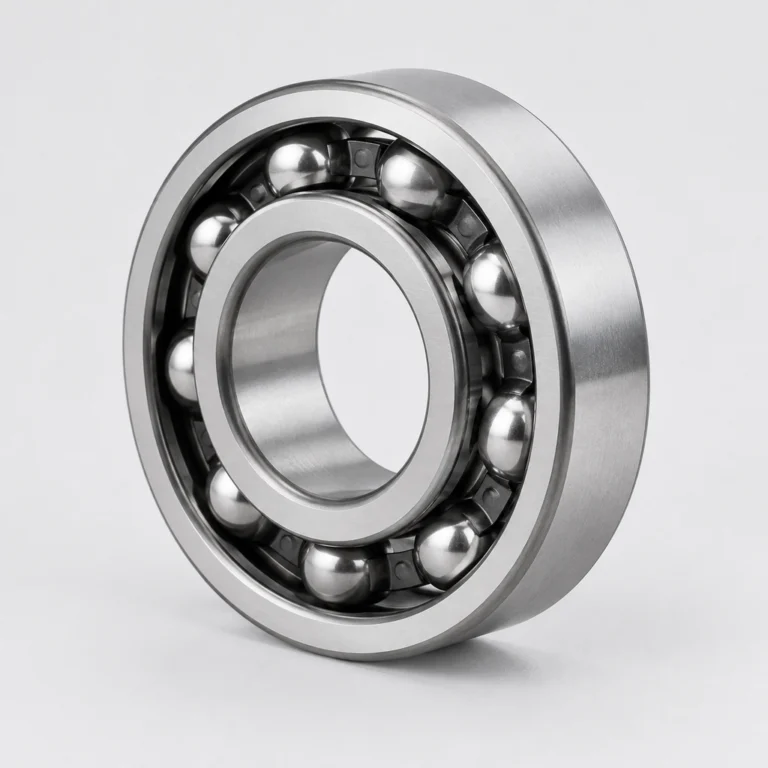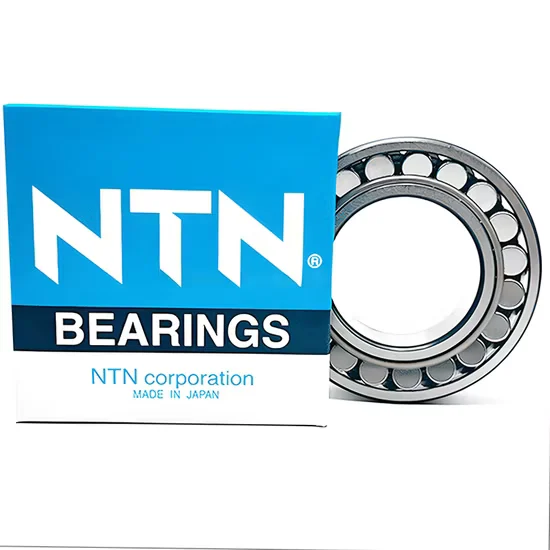


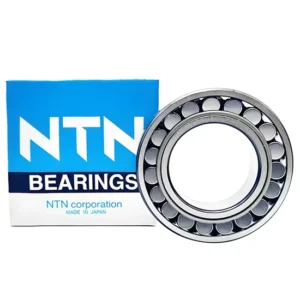
Multi-Brand Sourcing Consolidation — Procure the NTN 22307 spherical roller bearing alongside SKF or FAG equivalents in a single mixed-brand shipment without juggling multiple vendors.
Technical Specifications
| Parameter | Value |
|---|---|
| Designation | NTN 22307 |
| Bearing Type | Spherical Roller Bearing |
| Bore Diameter (d) | 35 mm |
| Outside Diameter (D) | 80 mm |
| Width (B) | 21 mm |
| Number of Rows | Double |
| Material | Bearing Steel |
| Load Direction | Radial |
| Separated | Unseparated |
| Origin | Japan |
Application Suitability
| Industry | Typical Applications |
|---|---|
| Mining & Aggregates | Vibrating screens and crushers subjected to high shock loads |
| Pulp & Paper | Paper machine dryer cylinders and press rolls |
| Metallurgy | Steel mill equipment including continuous casting machines and roller tables |
Why Standard Clearances Cause Catastrophic Seizures in the NTN 22307 Spherical Roller Bearing
Thermal expansion in heavy-duty environments rapidly eliminates internal clearance, turning a standard fit into a binding failure.
I learned this the hard way at a continuous casting machine site in Dongguan. A maintenance crew installed a spherical roller bearing with standard clearance where a C3 was mandatory. The intense ambient heat caused the inner ring to expand, wiping out the operational gap and locking the shaft solid within hours. When sourcing an NTN 22307 spherical roller bearing for vibrating screens or steel mill equipment, ignoring the thermal profile of your specific machinery guarantees unplanned downtime [NEED_CITE: bearing seizure mechanisms under thermal gradients].
Matching the Double-Row Geometry to Misalignment Challenges
The self-aligning capability of this NTN 22307 spherical roller bearing accommodates shaft deflections and housing bore misalignments common in heavy vibrating equipment. By allowing the inner ring and roller assembly to pivot relative to the outer ring, it prevents edge loading that typically destroys rigid bearing types. Our engineering team routinely cross-references these specific geometric tolerances against your OEM housing drawings to ensure the self-aligning feature functions as intended without inducing secondary axial stresses.
Navigating Shock Loads and Contaminated Environments
Crushers and vibrating screens subject rolling elements to severe radial shock loads and continuous high-frequency vibrations. Standard stamped steel cages often fatigue under these conditions, making the internal cage design and material critical for longevity. Furthermore, metallic dust and slurry ingress demand rigorous sealing strategies, though open designs rely heavily on external housing seals and precise relubrication intervals to flush out debris. Selecting the correct internal clearance and ensuring adequate lubrication flow are non-negotiable steps to prevent premature spalling [NEED_CITE: ISO 15243 rolling bearing failure modes].
Decoding the 35x80x21 mm Envelope and Unseparated Construction
The 35 mm bore, 80 mm outside diameter, and 21 mm width define a compact yet highly load-capable envelope for medium-sized heavy machinery. Its unseparated construction means the inner ring, cage, and roller assembly form a single, non-detachable unit, which simplifies installation and prevents component mismatch during maintenance. The bearing steel material provides the necessary core hardness and fatigue resistance for continuous radial loading. Because this specific designation lacks suffix modifications, it represents the baseline open configuration, requiring the equipment designer to specify the exact clearance class based on the operational temperature delta and interference fit requirements.
The Financial Drain of Overlooking Internal Clearance Specifications
Installing a standard clearance bearing in a high-heat or tight-interference application leads to rapid preload buildup, generating excessive friction and localized overheating. This accelerates lubricant degradation and initiates micro-pitting on the raceways long before the calculated L10 life is reached. According to failure analysis frameworks, a significant share of premature failures stems directly from improper clearance selection rather than material defects [NEED_CITE: ISO 281 bearing life calculation and clearance adjustments]. The resulting catastrophic damage often destroys adjacent shafts and housings, multiplying the repair costs far beyond the component price.
Securing Traceable Inventory for Critical Heavy-Duty Replacements
Sourcing genuine Japanese-origin components requires rigorous supply chain verification, which we execute by providing complete traceability documentation for every shipment. We maintain massive spot inventory covering thousands of standard part numbers, allowing us to fulfill single-unit emergency spare-part orders for this exact model without forcing you into bulk commitments. Our technical selection support helps you cross-check the required clearance class against your specific operating temperatures, preventing the exact misapplication errors I witnessed in the field. Additionally, our global shipping consolidation allows you to mix this unit with other premium brands in a single container, optimizing your freight costs.
Documentation & Authenticity
- Certificate of Conformity verifying the Japanese origin and manufacturing batch codes.
- Anti-counterfeit packaging validation confirming genuine markings on the outer ring.
- Dimensional inspection reports validating the 35x80x21 mm tolerances prior to dispatch.
- Material traceability certificates confirming the metallurgical grade of the bearing steel.
Storage, Handling & Mounting
- Store the unseparated assembly in its original moisture-barrier packaging until the exact moment of mounting to prevent raceway corrosion.
- Use induction heating for the 35 mm bore inner ring, strictly monitoring the temperature to preserve the bearing steel microstructure.
- Apply clean lint-free gloves when handling the open bearing to prevent sweat-induced micro-corrosion on the exposed rollers.
- Verify the shaft and housing tolerances before pressing, ensuring the interference fit does not inadvertently eliminate the required internal clearance.
Engineering Data Required for Precise Selection
To ensure this component perfectly matches your machinery, please share your specific radial and axial load profiles, operational speeds, and expected temperature gradients. Providing the OEM equipment model number allows our team to perform a comprehensive cross-reference check and verify the optimal internal clearance class. Supplying these operational parameters enables us to conduct a detailed L10 life calculation and recommend the most reliable lubrication strategy for your specific environment.
Frequently Asked Questions
Q: How do I determine the correct internal clearance for my vibrating screen?
A: Vibrating screens generate significant heat and often require tight interference fits on the shaft, both of which reduce internal clearance during operation. We typically recommend a C3 or C4 clearance class for these applications to compensate for thermal expansion and prevent the rollers from binding. Share your operating temperature and fit specifications so we can calculate the exact residual clearance needed.
Q: What documentation proves the authenticity of the Japanese origin?
A: Every shipment includes a Certificate of Origin and a Certificate of Conformity that trace the component back to the manufacturer’s production facilities. We also provide anti-counterfeit verification guidance, allowing your receiving team to check the specific packaging markings and laser-etched codes on the outer ring to guarantee you are installing a genuine product.
Q: Can this unseparated bearing be mounted using a hydraulic press?
A: While hydraulic presses are common, applying direct force through the rolling elements of an unseparated design will severely damage the raceways. For the 35 mm bore, induction heating of the inner ring is the preferred method, allowing it to slide onto the shaft smoothly without transferring mounting forces through the double-row roller assembly.
Q: How does the self-aligning feature protect against housing misalignment?
A: The spherically ground outer ring raceway allows the inner ring and roller assembly to pivot slightly, accommodating static misalignment from housing machining errors or shaft deflection under load. This prevents destructive edge loading on the rollers, though it does not compensate for dynamic shaft bending that exceeds the bearing’s internal angular limits.