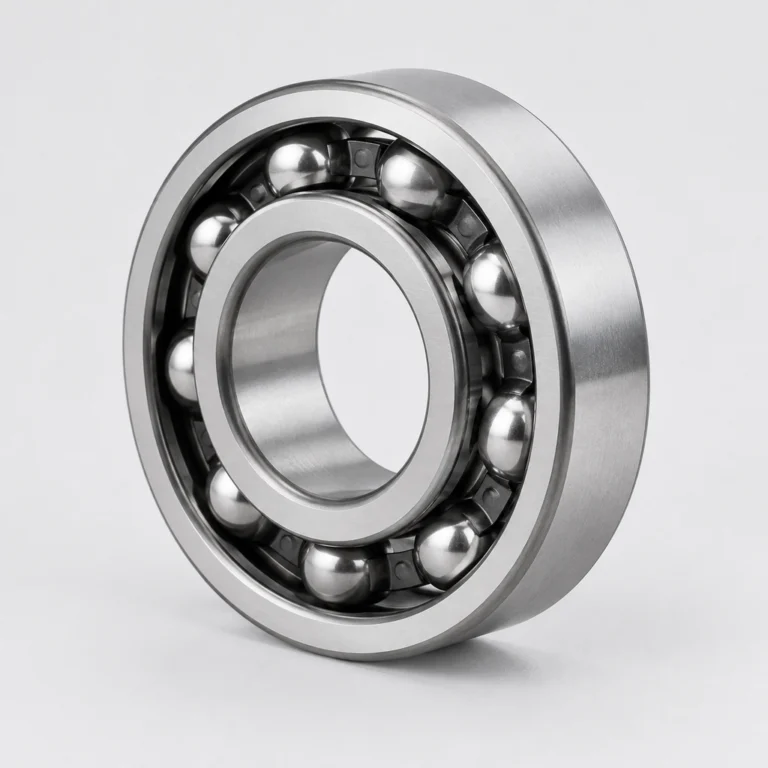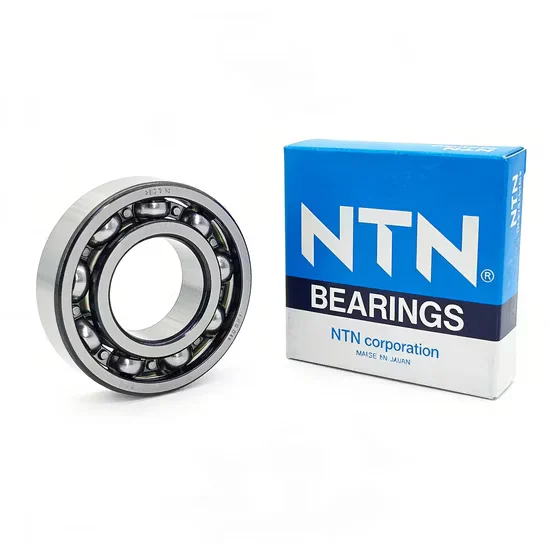




Unified Marine Sourcing — Consolidate this NTN 6305 deep groove ball bearing with other premium brands in a single shipment without juggling multiple suppliers.
Technical Specifications
| Parameter | Value |
|---|---|
| Designation | NTN 6305 |
| Bearing Type | Deep Groove Ball Bearing |
| Bore Diameter (d) | 25 mm |
| Outside Diameter (D) | 62 mm |
| Width (B) | 17 mm |
| Material Options | Premium GCr15 chrome steel with custom anti-corrosion treatment, or stainless steel variants |
| Lubrication | Grease or oil |
| Feature | Corrosion-resistant and salt-spray-proof design |
| Origin | Japan |
| HS Code | 8482300000 |
Application Suitability
| Industry | Typical Applications |
|---|---|
| Marine Equipment | Ship on-board machinery, deck cranes, winch drives |
| Fluid Handling | Marine pumps, ballast systems, cooling water circulators |
| Power Transmission | Gearboxes and electric motors in humid engine rooms |
Why Standard Seals Fail Before the Steel Corrodes in Marine Environments
Standard metal shields trap saltwater inside the raceway, accelerating internal pitting long before external rust appears.
During my early years servicing auxiliary marine engines in Nigerian ports, I watched standard shielded bearings seize within months. The high-salinity mist and abrasive silt bypassed thin metal covers, turning the grease into a grinding paste. Specifying a truly corrosion-resistant NTN 6305 deep groove ball bearing requires looking beyond basic part numbers to evaluate how the internal geometry and surface treatments handle relentless salt-spray exposure. Many procurement engineers assume that any sealed unit will suffice for deck machinery, but the microscopic clearance between a metal shield and the inner ring easily wicks in seawater through capillary action. Once inside, the moisture reacts with the standard chrome steel, creating abrasive iron oxide particles that score the raceways and destroy the rolling elements from the inside out [NEED_CITE: bearing failure mechanisms in marine environments]. This hidden degradation often leads to sudden catastrophic failure during critical cargo operations, emphasizing the need for specialized marine-grade specifications.
Matching the Bearing Profile to Shipboard Operational Demands
Shipboard auxiliary machinery operates under constant vibration and high humidity, demanding components that resist moisture ingress and maintain structural integrity. This NTN 6305 deep groove ball bearing is engineered with customized anti-corrosion properties to maintain smooth rotation in damp engine rooms and exposed deck areas. The open configuration allows maintenance crews to thoroughly flush out contaminated lubricants and apply fresh, water-resistant grease during scheduled dry-dock periods. Our sourcing network ensures you receive genuine units with complete traceability, eliminating the risk of installing counterfeit parts that would rapidly degrade at sea and compromise the reliability of essential fluid handling systems.
Navigating Salt Mist, Radial Loads, and Lubrication Washout
Marine winches, ballast pumps, and cooling circulators subject components to steady radial loads combined with occasional axial shocks from vessel motion and wave impacts. In these washdown-heavy zones, standard lubricants easily emulsify when exposed to deck washing routines, leaving the rolling elements completely unprotected against saltwater intrusion. Selecting the appropriate grease or oil lubrication is critical to prevent washout and maintain the protective elastohydrodynamic film thickness across the contact zones [NEED_CITE: lubrication failure modes in high-humidity applications]. Furthermore, the absence of restrictive contact seals on open-type designs allows for unrestricted oil flow in splash-lubricated gearboxes, ensuring that heat generated by high-speed rotation is effectively dissipated while continuously flushing away microscopic wear debris.
Decoding the Open Design and Material Selection
The absence of a suffix on this designation indicates an open bearing configuration, which is frequently preferred in marine gearboxes where the housing provides primary sealing and continuous oil splash lubrication. For applications requiring standalone moisture resistance, the bearing is available in premium GCr15 chrome steel with custom anti-corrosion treatment or specialized stainless steel variants to match specific operational hazards. The 25 mm bore, 62 mm outside diameter, and 17 mm width conform strictly to standard ISO dimensional tolerances, ensuring direct interchangeability with existing pump and motor housings without requiring machining modifications. Choosing between grease-packed and oil-bath setups depends entirely on the operational speed, the housing’s ability to retain the lubricant, and the frequency of scheduled maintenance intervals. By understanding these fundamental design parameters, marine engineers can avoid the common pitfall of installing sealed bearings in oil-bath systems, which often leads to lubricant starvation and premature thermal failure.
The Cascading Impact of Premature Seizure on Vessel Operations
Installing an improperly specified component in a critical shipboard pump can lead to unplanned downtime and catastrophic damage to the impeller shaft and surrounding seals. According to ISO 15243 classification frameworks, surface distress and corrosive wear are primary failure modes when moisture breaches the raceway and compromises the lubricant film [NEED_CITE: rolling bearing damage classification per ISO 15243]. Such premature failures not only void equipment warranties but also force emergency air-freight replacements from distant ports, drastically inflating maintenance budgets and delaying vessel departure schedules. The secondary damage caused by a seized bearing often necessitates the complete replacement of the driven equipment, multiplying the initial cost savings of purchasing a cheaper, non-marine-grade alternative.
Securing Authentic Marine-Grade Components Through Verified Channels
Sourcing genuine marine-grade bearings requires evaluating a global market flooded with visually identical but metallurgically inferior counterfeits that fail rapidly in harsh conditions. We provide complete batch traceability documentation for every unit, ensuring the custom anti-corrosion treatments meet original factory specifications and perform reliably in salt-spray environments [NEED_CITE: anti-corrosion coating durability standards for marine components]. Our flexible consolidation services allow you to mix this specific model with other heavy-duty brands in a single container, optimizing your freight costs and simplifying customs clearance for international shipyards. Additionally, our technical team offers cross-brand equivalent model consultation if you need to upgrade older open designs to better-sealed alternatives for specific deck machinery, ensuring optimal performance without trial-and-error procurement.
Documentation & Authenticity
- Certificate of Conformity verifying the Japanese origin and genuine manufacturer branding.
- Original batch traceability records linking the specific anti-corrosion treatment to the production run.
- Official app QR code authentication for instant verification of the bearing’s legitimacy.
- Material inspection reports confirming the metallurgical composition of the chrome steel or stainless variants.
- Dimensional and running accuracy inspection reports ensuring ISO tolerance compliance before dispatch.
Storage, Handling & Mounting
- Keep the original moisture-barrier packaging intact until installation to protect the custom anti-corrosion coating.
- Use clean, lint-free gloves when handling the open bearing to prevent acidic sweat from initiating surface rust.
- Apply marine-grade grease immediately after unboxing if the housing lacks continuous oil splash lubrication.
- Ensure the 25 mm shaft and 62 mm housing seats are free of silt before pressing.
- Store spare units in a climate-controlled environment away from direct salt-spray to preserve factory preservatives.
Providing the Right Parameters for Technical Verification
To ensure this open design is the optimal fit for your specific shipboard machinery, please share the operational radial and axial loads, rotational speeds, and ambient temperature ranges. If you are replacing an existing unit, providing the OEM equipment number allows our engineering team to perform a precise cross-reference check. Detailing the exact exposure to saltwater or washdown chemicals will help us confirm whether the standard anti-corrosion treatment is sufficient or if a stainless steel variant is required.
Frequently Asked Questions
Q: How can I verify the authenticity of the bearing through authorized channels?
A: You can verify authenticity by scanning the QR code on the packaging using the manufacturer’s official mobile application. We also provide a Certificate of Conformity and original batch traceability documents that link the specific unit to its production run in Japan, ensuring complete transparency and protecting your vessel from counterfeit risks.
Q: What are the specific advantages of corrosion-resistant bearings in marine environments?
A: In high-salinity and humid marine environments, standard bearings suffer from raceway pitting and grease emulsification. Corrosion-resistant variants utilize specialized surface treatments or stainless steel materials that substantially delay oxidative degradation, maintaining smooth rotation and preventing premature seizure in critical shipboard pumps and deck machinery.
Q: How do I choose between grease and oil lubrication for ship on-board machinery?
A: The choice depends on the housing design and operational speed. Open bearings in enclosed gearboxes typically rely on oil splash lubrication for continuous cooling and cleaning. Conversely, standalone marine pumps often require high-adhesion, water-resistant marine grease to prevent washout and protect the rolling elements from saltwater intrusion.
Q: What are the common failure modes of bearings in humid and salt-spray conditions?
A: According to ISO 15243, the most frequent failure modes in these conditions include corrosive wear, surface distress from water etching, and lubricant degradation. Moisture ingress causes the grease to emulsify, leading to metal-to-metal contact, accelerated fatigue, and eventual seizure if the anti-corrosion protection is inadequate.
Q: How can I determine the correct maintenance cycle for marine applications?
A: Maintenance cycles should be based on the severity of salt-spray exposure and the effectiveness of the housing seals. Regular visual inspections for grease discoloration and acoustic monitoring for early signs of surface distress are essential. Re-lubrication intervals must be shortened significantly for open designs operating in washdown-heavy zones compared to standard industrial environments.