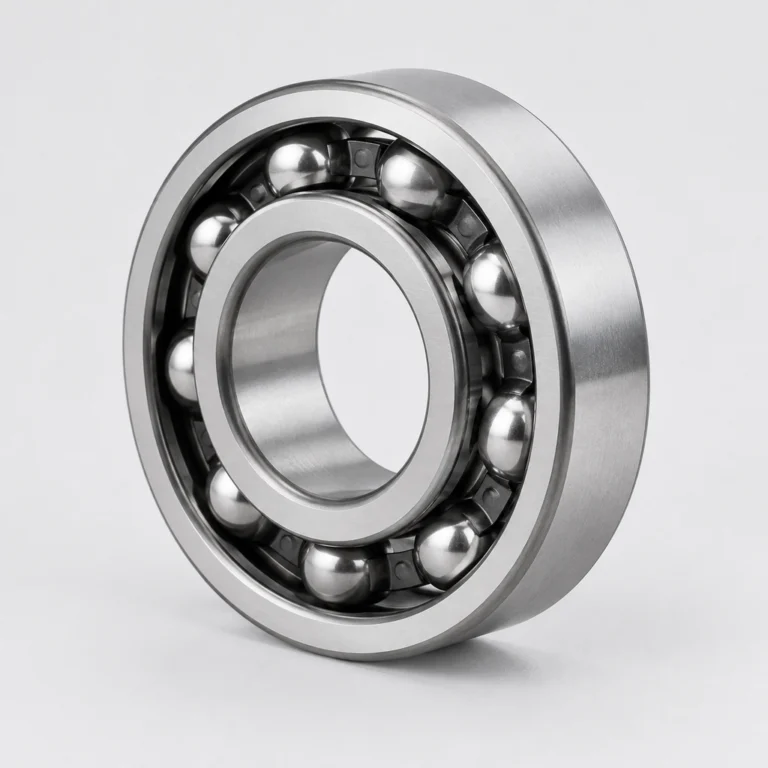
Cross-Reference Alignment Verified — Our engineering team cross-checks dimensional and load equivalencies across major catalogs to ensure exact fitment.
Technical Specifications
| Parameter | Value |
|---|---|
| Designation | 51101 51201 |
| Bearing Type | Thrust Ball Bearing |
| Lubrication | Grease or Oil |
| Precision Class | P0, P6, P5, P4, P2 |
| Vibration Level | Z1V1, Z2V2, Z3V3 |
| Certification | ISO9001:2008 |
| Aligning | Non-Aligning Bearing |
| Separated | Separated |
| Number of Rows | Single |
| Load Direction | Thrust |
| Material | Bearing Steel |
| Origin | China |
| HS Code | 8482102000 |
Application Suitability
| Industry | Typical Applications |
|---|---|
| Automobile | Transmission thrust mechanisms |
| Rolling Mill | Roll neck axial positioning |
| Mine & Metallurgy | Vertical centrifuge main shafts |
| Heavy Machinery | Hydraulic jack lifting screws |
Why Default Cage Selection Destroys Vertical Centrifuge Uptime
When specifying a BDL 51101 51201 thrust ball bearing for vertical centrifuges, overlooking cage material often leads to catastrophic downtime. Standard stamped steel cages fail rapidly under high-temperature axial loads, necessitating machined brass alternatives. I learned this the hard way in Qingdao when a client reported premature cage fracture in a vertical centrifuge. We supplied standard thrust bearings based solely on the equipment model, but the elevated operating temperatures caused the stamped steel cage to snap within months. Switching to a brass cage design resolved the issue permanently, proving that application-specific component validation is critical. Many maintenance teams assume standard catalog parts will suffice, but thermal stress fundamentally alters the mechanical properties of standard cage materials, leading to unexpected brittle fractures [NEED_CITE: bearing cage failure modes under thermal stress].
Matching Axial Load Capacity to Centrifuge and Jack Demands
The BDL 51101 51201 thrust ball bearing handles pure axial loads in demanding vertical setups. Our global sourcing network ensures these separated single-row units are available in multiple precision classes to match your exact operational tolerances. Whether you need emergency spare parts or full container consolidation, we provide complete traceability for every shipment. Vertical centrifuges impose continuous, heavy axial forces that demand robust raceway geometry, while hydraulic jacks experience shock loads during lifting operations. By carefully evaluating the specific load profile of your machinery, our engineering team can recommend the optimal dimension series to prevent localized stress concentrations and ensure reliable, long-term performance across diverse industrial environments.
Navigating Thermal and Lubrication Variables in Heavy Equipment
Vertical centrifuges and heavy-duty jacks subject thrust bearings to intense axial pressure and fluctuating thermal environments. Elevated temperatures can degrade standard grease, making oil lubrication or high-temperature grease variants essential for maintaining the lubricant film. Furthermore, the separated design requires precise alignment during installation to prevent uneven load distribution across the rolling elements. Misalignment in these non-aligning bearings accelerates raceway wear and compromises the overall L10 life. In metallurgical applications, airborne contaminants like scale dust can infiltrate the bearing assembly if proper external shielding is not implemented. Selecting the correct lubrication strategy and ensuring meticulous cleanliness during the mounting process are vital steps to mitigate these severe operational challenges and prevent premature degradation [NEED_CITE: impact of misalignment on thrust bearing fatigue life].
Decoding Precision Classes and Vibration Limits
The available precision classes ranging from P0 to P2 dictate the running accuracy and dimensional tolerances of these thrust bearings. Higher precision grades like P4 or P2 are crucial for high-speed vertical centrifuges where minimal axial runout prevents vibration-induced damage. Complementing this, the Z1V1 to Z3V3 vibration levels indicate the dynamic balance of the rolling elements and raceways. A lower vibration level ensures smoother operation in sensitive metallurgical equipment, reducing the transmission of harmonic frequencies to the surrounding structure. Additionally, the separated single-row configuration allows for independent mounting of the shaft and housing washers, simplifying maintenance in confined jack assemblies. Understanding how these tolerance bands interact with your specific shaft and housing machining limits is essential for achieving the desired operational smoothness and preventing binding under heavy axial thrust.
The Financial Impact of Overlooking Application-Specific Tolerances
Selecting an inadequate precision class or ignoring lubrication requirements leads to unplanned downtime and premature failure. According to the failure mode classification per ISO 15243, inadequate lubrication and thermal overload are primary drivers of raceway spalling and cage fracture. Such catastrophic damage not only voids warranties but also halts entire production lines in rolling mills. Relying on generic replacements without verifying the exact dimensional specifications often results in costly secondary machining or complete assembly rejection. When a vertical centrifuge stops unexpectedly due to a shattered thrust bearing, the resulting loss of production output and the expense of extracting the damaged components far exceed the initial savings of purchasing a lower-tier replacement. Proactive specification review is the most effective defense against these hidden operational costs [NEED_CITE: rolling bearing failure mode classification per ISO 15243].
Securing Authentic Thrust Components Through Rigorous Verification
We supply genuine bearings with complete traceability documentation, ensuring every BDL unit meets ISO-compliant quality assurance standards. Our technical team provides cross-brand equivalent model consultation to verify if your specific application requires a specialized cage material not explicitly stated in standard catalogs. We maintain massive spot inventory covering thousands of standard part numbers, enabling flexible MOQ from single-unit emergency orders to bulk project shipments. Furthermore, our competitive sourcing cost compared to direct official channels optimizes your MRO budget without sacrificing authenticity. Every shipment includes global shipping consolidation and long-term after-sales technical support for failure analysis. By leveraging our deep understanding of thrust bearing failure modes, we help procurement engineers avoid the common pitfall of mismatching standard catalog specifications with extreme operational realities.
Documentation & Authenticity
- Certificate of Conformity verifying ISO9001:2008 compliance for every thrust bearing batch.
- Original factory batch traceability linking the 51101 and 51201 units to specific production runs.
- Material inspection reports confirming bearing steel composition and heat treatment hardness.
- Dimensional and running accuracy inspection reports validating P0 through P2 precision classes.
- Vibration level test certificates ensuring Z1V1 to Z3V3 dynamic balance specifications are met.
Storage, Handling & Mounting
- Store the separated shaft and housing washers in original packaging to prevent corrosion before assembly.
- Use clean gloves when handling the precision-ground raceways to avoid moisture-induced micro-pitting.
- Apply induction heating for the housing washer if tight interference fits are required in jack bases.
- Ensure strict axial alignment during mounting, as these non-aligning bearings cannot compensate for angular misalignment.
- Verify the selected grease or oil lubrication matches the operating temperature of the vertical centrifuge.
Engineering Data Required for Accurate Thrust Bearing Selection
To ensure optimal performance, please share your exact axial load, rotational speed, and operating temperature parameters for L10 life calculation. If replacing an existing unit, provide the OEM equipment model number so our engineering team can perform a precise cross-reference check. Detailing the environmental exposure, such as metallurgical dust or moisture, helps us recommend the most suitable lubrication and sealing configuration.
Frequently Asked Questions
Q: What are the dimensional differences between the 51101 and 51201 thrust ball bearings?
A: While both are single-row thrust ball bearings designed for pure axial loads, they belong to different dimension series. The 51201 series typically features a larger cross-section and higher load-carrying capacity compared to the 51101 series. Always verify the exact bore, outside diameter, and width against the official catalog to ensure proper fitment in your specific jack or centrifuge assembly.
Q: How to choose between grease and oil lubrication for vertical centrifuge applications?
A: Grease is generally preferred for vertical centrifuges due to its sealing properties and simpler maintenance, provided the operating temperatures remain within standard limits. However, if the centrifuge generates excessive heat or operates at very high speeds, oil lubrication becomes necessary to dissipate thermal energy and maintain a stable hydrodynamic film. Consult our technical team to match the lubricant to your specific thermal profile.
Q: How do precision classes from P0 to P2 affect thrust bearing performance in jacks?
A: Higher precision classes like P4 or P2 offer tighter dimensional tolerances and reduced axial runout, which is critical for high-speed or highly sensitive machinery. For standard hydraulic jacks operating at low speeds, a P0 or P6 precision class is usually sufficient and more cost-effective. Selecting the appropriate grade prevents unnecessary expenditure while ensuring the lifting mechanism operates smoothly without binding or excessive vibration.
Q: What is the correct installation procedure for separated thrust ball bearings?
A: Since these are separated bearings, the shaft washer, housing washer, and ball-cage assembly must be mounted independently. Ensure the shaft washer fits tightly against the rotating shaft, while the housing washer sits securely in the stationary housing. Apply the specified grease or oil before final assembly, and verify that the non-aligning design is not subjected to angular misalignment, which could cause premature raceway spalling.
Q: How to verify the authenticity and traceability of BDL bearings upon delivery?
A: Upon delivery, inspect the packaging for intact factory seals and check the bearing rings for laser-etched designations and precision class markings. Cross-reference the provided Certificate of Conformity and material inspection reports with the batch numbers on the physical units. Our supply chain guarantees complete traceability, allowing you to verify the origin and ISO9001:2008 compliance of every 51101 and 51201 bearing received.