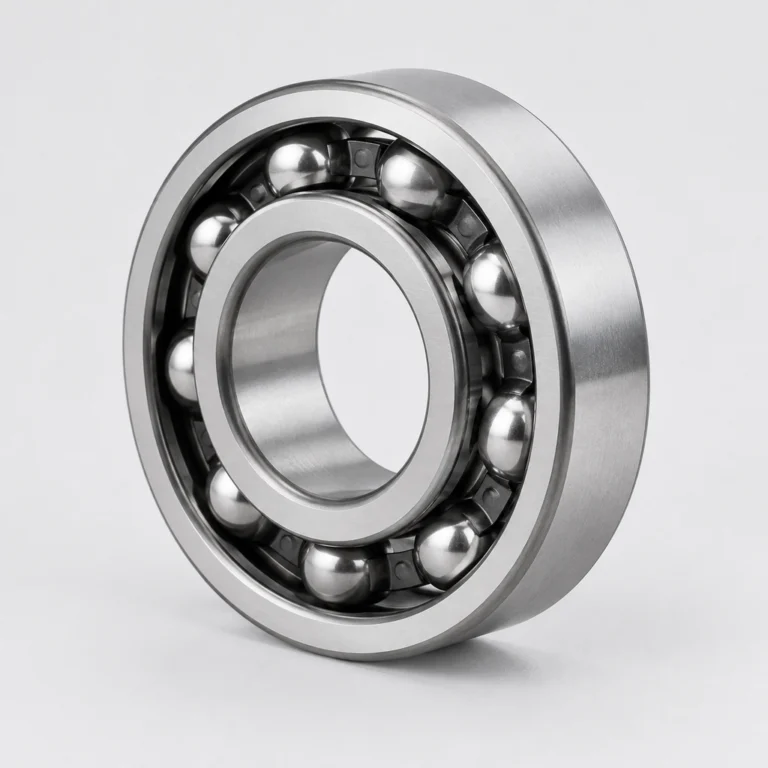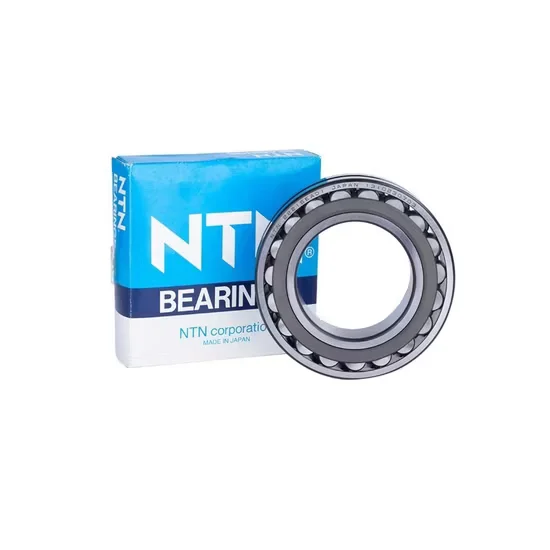


Genuine Origin Verification — Every 22211E spherical roller bearing ships with a scannable QR code linked to the manufacturer’s official authentication app for immediate traceability.
Technical Specifications
| Parameter | Value |
|---|---|
| Designation | 22211E |
| Bearing Type | Spherical Roller Bearing |
| Bore Diameter (d) | 55 mm |
| Outside Diameter (D) | 100 mm |
| Width (B) | 25 mm |
| Precision Class | P0, P6, P5, P4, P2 |
| Clearance Class | C0, C3, C4 |
| Number of Rows | Double |
| Material | Bearing Steel |
| Load Direction | Radial Bearing |
| Separated | Unseparated |
| Origin | China |
| HS Code | 8482300000 |
| Internal Design | E (Enhanced capacity) |
Application Suitability
| Industry | Typical Applications |
|---|---|
| Mining & Aggregates | Vibrating screens, jaw crushers, cone crushers |
| Pulp & Paper | Paper machine dryer cylinders, press rolls |
| Metals & Steel | Steel mill equipment, continuous casting machines, roller tables |
Why Standard Clearance Fails in High-Vibration Screening Equipment
Thermal expansion under continuous vibratory stress rapidly eliminates internal clearance, leading to catastrophic seizure.
I learned this the hard way at a cement plant in Riyadh many years ago. A misapplied standard clearance bearing on a heavy-duty line seized and burned out due to severe heat buildup, halting the entire operation for days. When specifying a 22211E spherical roller bearing for vibrating screens or heavy crushers, ignoring the thermal dynamics of the application guarantees unplanned downtime. The intense friction generated by continuous high-frequency vibrations causes the inner ring and rollers to expand rapidly. If the initial internal clearance is not sufficient to absorb this thermal growth, the components will bind together. [NEED_CITE: rolling bearing failure mode classification per ISO 15243]
Aligning Capacity for Misaligned Heavy Machinery
The self-aligning capability inherently accommodates shaft deflections and housing misalignments that are extremely common in rugged mining and steel mill environments. By distributing massive radial loads evenly across the double row of symmetrical rollers, the 22211E spherical roller bearing minimizes destructive edge stress on the raceway. This intelligent design ensures reliable, continuous operation even when structural flexing or foundation settling occurs under extreme operational loads, protecting the entire drivetrain from premature fatigue.
Navigating Shock Loads and Thermal Gradients
Crushers and vibrating screens subject mechanical components to severe shock loads and continuous high-frequency vibrations that standard bearings simply cannot endure. These punishing conditions generate significant frictional heat, demanding a much wider internal clearance to compensate for rapid thermal expansion during startup and peak operation. Furthermore, heavy contamination from abrasive dust and metallic debris requires highly effective external lubrication protocols to prevent catastrophic abrasive wear. Without proper thermal and contamination management, the raceway surfaces will quickly degrade. [NEED_CITE: bearing life calculation under variable load conditions per ISO 281]
Decoding the ‘E’ Suffix and Clearance Selection
The ‘E’ suffix denotes an enhanced internal design featuring optimized roller profiles and a modified cage structure, substantially increasing the radial load-carrying capacity and overall fatigue resistance. For high-vibration applications, selecting the correct clearance class—typically C3 or C4—is absolutely critical to prevent the bearing from tightening up and seizing as operational temperatures rise. The availability of multiple precision classes, ranging from standard P0 up to highly precise P2, allows maintenance engineers to match the exact rotational accuracy and runout limits required by their specific machinery. Properly aligning these internal geometries with the external operating environment is the key to maximizing service intervals.
The Financial Impact of Premature Seizure
Selecting a standard clearance variant for a high-heat vibrating screen inevitably leads to premature failure and catastrophic damage to the expensive shaft and housing assemblies. The resulting unplanned downtime far exceeds the initial component cost, severely disrupting tight production schedules and immediately voiding equipment warranties. Adhering to established failure analysis frameworks helps procurement and maintenance teams identify these hidden operational risks before the initial purchase order is even placed. Ignoring these fundamental selection principles turns a minor maintenance task into a major capital expenditure. [NEED_CITE: rolling bearing failure mode classification per ISO 15243]
Securing Authentic Components for Critical Assets
We source genuine bearings with complete traceability documentation, ensuring the ‘E’ suffix internal design strictly meets exact factory specifications without compromise. Our cross-brand equivalent model consultation guarantees that substitute options perfectly align in physical dimensions, clearance class, and internal geometry. We maintain massive spot inventory for urgent maintenance requirements, effectively eliminating the typical multi-week lead times associated with direct official brand channels. This comprehensive approach ensures your critical assets receive the exact engineered components they need to maintain continuous production without extended delays.
Documentation & Authenticity
- Certificate of Conformity validating the specific P-class precision and C3/C4 clearance tolerances.
- Original factory batch traceability records linking the component to its exact production run.
- Official manufacturer app QR code for instant on-site authenticity verification.
- Material inspection reports confirming the high-purity bearing steel composition.
- Dimensional and running accuracy inspection reports verifying P0-P2 tolerances before dispatch.
- Certificate of Origin detailing the manufacturing country for customs and compliance.
Storage, Handling & Mounting
- Store the unseparated double-row assembly in its original packaging to protect the enhanced rollers from moisture.
- Use induction heaters with precise temperature control when mounting the 55 mm bore to prevent thermal damage.
- Verify the residual internal clearance after mounting to ensure the C3 or C4 class was not compromised.
- Apply clean gloves during handling to prevent sweat-induced corrosion on the precision-ground outer raceway.
- Follow strict external lubrication protocols for the open design to flush out abrasive crusher dust during operation.
Engineering Review for Optimal Selection
To ensure the selected variant perfectly matches your specific operational demands, please provide the detailed radial and axial loads, operating speeds, and ambient temperatures. Sharing the exact OEM equipment model number allows our technical team to perform a precise cross-reference verification against our extensive database. We will then conduct a comprehensive L10 life calculation and recommend the optimal clearance class, precision grade, and lubrication strategy tailored specifically for your unique application environment.
Frequently Asked Questions
Q: What does the ‘E’ suffix indicate on this component?
A: The ‘E’ suffix signifies an enhanced internal design featuring optimized roller profiles and a modified cage. This engineering update substantially increases the radial load-carrying capacity and improves fatigue life under heavy loads compared to standard internal designs, making it ideal for demanding crushing and screening equipment.
Q: How do I choose between C3 and C4 clearance for a vibrating screen?
A: Vibrating screens generate significant frictional heat and operate with tight interference fits. C3 clearance accommodates standard thermal expansion, while C4 provides extra internal space for extreme heat or severe vibratory stress. We recommend analyzing your specific operating temperature and shaft fit to prevent internal clearance elimination during operation.
Q: What is the practical difference between P0 and P6 precision here?
A: P0 is the standard precision suitable for general heavy machinery where slight runout is acceptable. P6 offers tighter dimensional and running accuracy tolerances, which reduces vibration and noise while extending service life in high-speed or precision-driven paper machine applications. The choice depends on your equipment’s rotational stability requirements.
Q: What are the best practices for mounting this 55 mm bore bearing?
A: For a cylindrical bore, use an induction heater to expand the inner ring evenly without exceeding the thermal limit of standard bearing steel. Avoid direct flame heating. Utilize appropriate hydraulic or mechanical mounting tools to press the inner ring onto the shaft, ensuring no force is transmitted through the rollers or the enhanced cage structure.
Q: How should lubrication be managed in a dusty crusher environment?
A: Since this is an open design, establish a rigorous external re-lubrication schedule using a high-quality grease with solid additives like molybdenum disulfide. The continuous flow of fresh grease purges abrasive dust and debris from the raceway, while the enhanced internal geometry ensures adequate grease distribution across the double row of rollers.